



Willow (Grey)

General characteristics of a Willow (Grey)
Grey willow is a shrub, or rarely a small tree, whose branches have a grayish, felt-like hairiness. The entire plant has a grayish appearance, which is also reflected in the name: cinerea means ash-colored or ashen. A shrub that can grow up to 10 m tall, it spreads widely and resembles the pussy willow. The leaves are silvery and slightly hairy on the underside. It is a fast-growing species that often grows in damp areas. The grey willow grows mainly in damp areas such as swamps, along rivers, and in moist forests. The catkins are a valuable food source for bees and other insects.
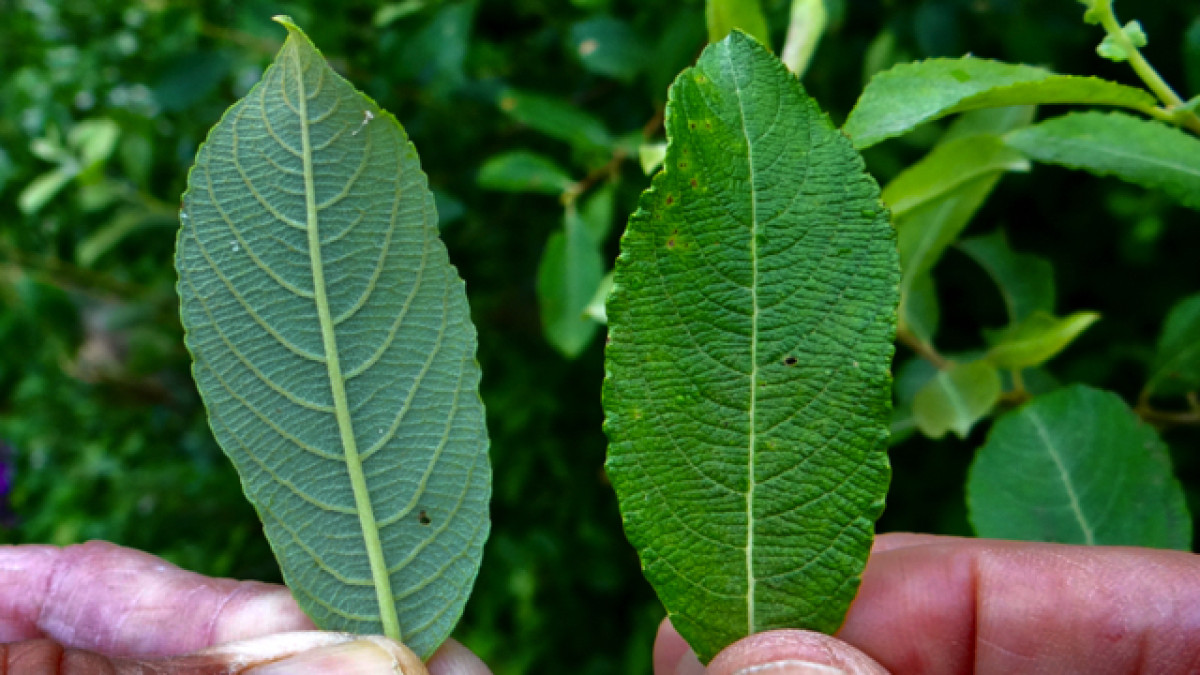
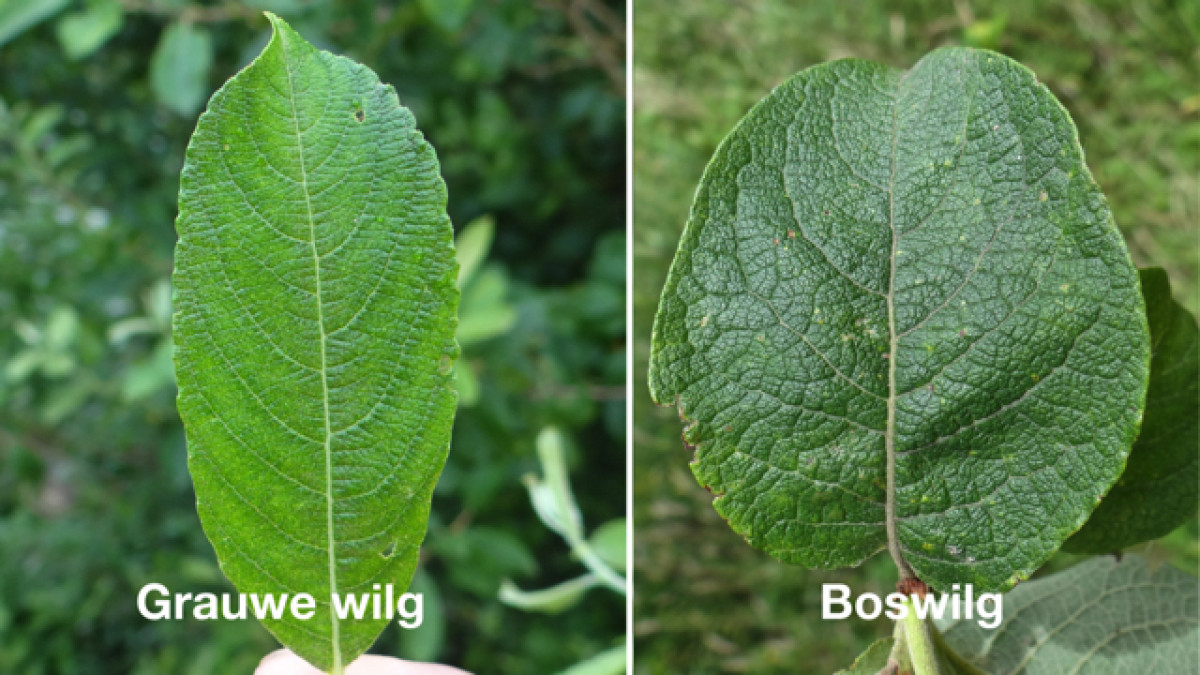
While willow species are recognizable as a group, the species are not always easy to distinguish. Grey willow is a truly difficult and somewhat variable species. The pussy willow and the eared willow, in particular, strongly resemble grey willow. The former is primarily a tree, larger than the latter in every respect, including leaf length and width. The leaves of the Goat Willow resemble apple leaves, and the stipules on the young branches are larger. The second, the Eared Willow, is smaller in every respect, with a leaf less than 3 cm long, noticeably wrinkled with a wavy margin. The leaf is dull blue-green on top, gray and felty-hairy on the underside. The young branches, in particular, but also the older ones, have short, felty hairs.
Characteristics
How to plant a Willow (Grey)
Plant the cuttings 30-40 cm deep into the soil. Another option is to first place the cuttings in water to help them root.
How to harvest a Willow (Grey)
Freshly pruned branches can be used for planting or rooting.
Caring for and pruning your Willow (Grey)
The willow is a hardy shrub known for its adaptability to various environments, making it relatively easy to care for. Key care requirements include regular watering during dry spells and annual pruning to maintain shape and encourage healthy growth. Special care for the willow is to provide well-draining soil to prevent root rot and ensure there is sufficient space, as it can grow quite large.
The best pruning periods for willows are early spring, late autumn, and winter. For pollarding, prune at least once every three years.
Pruning
Pruning a willow can promote growth and help it maintain its shape. Generally, the best time to prune a willow is during late winter to early spring, when the tree is dormant. This is usually between January and March, depending on the specific climate zone. Pruning a willow during this period minimizes the risk of disease and infection, as the tree is less susceptible to stressors. Furthermore, it's easier to identify branches that need to be removed because the tree's foliage is absent. If you notice your willow is becoming overgrown, showing signs of disease, or simply needs a new shape, now is the ideal time to take action.
Pollarding
Pollarding a willow is a traditional pruning method used to rejuvenate the tree and extend its lifespan. The best time to pollard a willow is in late autumn or early winter, usually between November and December. During this period, the tree has shed its leaves and is in a dormant state. Pollarding a willow involves cutting the branches back to the trunk, creating a gnarled, characteristic shape. This process stimulates the growth of new shoots and creates a denser, healthier structure. It is important to remember that not all willows are suitable for pollarding, so it is advisable to seek advice from a professional landscaper before undertaking this step.
Where does a Willow (Grey) grow
Grey willow is strongly associated with moist locations, but not limited to acidic soils like eared willow. We find this species in moist forests, dune slacks, lowland peatlands, along rivers, and in stream valleys. The species is very common in the Netherlands, but is somewhat less common in the northern clay areas. In Belgium, it is fairly common to quite rare. The species also occurs in Europe (except the westernmost part), in the temperate regions of Asia, and in North Africa.
General
| Origin |
Native
|
| Tree Type | Deciduous tree |
Length and Age
| Length in about 10 years | 2 Up to 4 Meter |
| Reproductive Maturity in How Many Years | 0 Up to year |
| Maximum Age | 50 Up to 100 year |
| Required Space | Up to m2 |
| Growth Rate |
Reproduction
| Tree is Self-Pollinating | No |
| Reproduction Method |
To cut (cutting is between 5 and 50 cm)
To be pollarded (the slit is approximately 2m)
Makes seedlings
|
| Reproduction rate |
|
Reproduction rate
| 1. Very low reproduction rate. The plant hardly spreads, has few seeds or vegetative spread (e.g., trees with heavy seeds). |
| 2. Low reproduction rate. Spread via limited seed production or specific conditions required |
| 3. Average reproduction rate. Regular spread, depending on wind, water, or animals, at a moderate speed (e.g., dandelion). |
| 4. High reproduction rate. Many seeds and multiple spread strategies (wind, birds, vegetative). Quickly colonizes open spaces |
| 5. Very high reproduction rate. Invasive species that spread explosively over large distances (e.g., Japanese knotweed). |
Pruning Period
| This Tree is Evergreen | No |
| Summer | June tot July |
| Winter | October tot March |
| Leaf Shapes | Elongated |
| Easy to prune | Yes |
Bark Characteristics Seedling (50-200cm)
| Colour |
Bud Characteristics Seedling (50-200cm)
| Colour | |
| Bud Position |
Spread out
|
| Bud Shape |
Egg-shaped
|
Other
| Root |
Superficial rooting
|
| Bloom |
Has catkins
|
| Wind sensitivity | Not sensitive to (sea) wind |
Diseases
| Sensitive to the Following Diseases |
Watermark disease (Willow)
|
Harvest/recognition in winter
The branches and twigs are often crooked, grayish-green or brownish-gray. The youngest twigs are often lightly hairy. The buds are brown, ovoid, small, and lightly hairy. The buds are scattered along the branches. In young specimens, the bark is smooth and grayish; in older specimens, it is rougher and often has large grooves and fissures.
Light requirement of the Willow (Grey)
Suitable soil types for the Willow (Grey)
| Soil type | Suitability |
|---|---|
| light clay |
|
| heavy clay |
|
| sand |
|
| peatland |
|
| Loam |
|
| Moerig op zand |
|
| Lichte zavel |
|
| Zware zavel |
|
Humidity
Suitable acidity level for the Willow (Grey)
Nutritional needs of the Willow (Grey)
| 1. | Very nutrient-poor soil |
| 2. | Very nutrient-poor to nutrient-poor soil |
| 3. | Nutrient-poor soil |
| 4. | Nutrient-poor to moderately nutrient-rich soil |
| 5. | Moderately nutrient-rich soil |
| 6. | Moderately nutrient-rich to nutrient-rich soil |
| 7. | Nutrient-rich soil |
| 8. | Extremely nutrient-rich soil |
| 9. | Very extremely nutrient-rich soil |
Humidity
| 1. | Extremely dry soils |
| 2. | Extremely dry to dry soils |
| 3. | Dry soils |
| 4. | Dry to dry/moist soils |
| 5. | Dry/moist soils |
| 6. | Dry/moist to moist soils |
| 7. | Moist soils |
| 8. | Moist to wet soils |
| 9. | Wet soils |
To be applied in landscapes
| Landscape | Suitability |
|---|---|
| Agroforestry |
|
| Hedge |
|
| Hedge |
|
| Forest |
|
| Feeding hedge |
|
| Back yard |
|
| Small back yard |
|
| Solitary |
|
| Wood wall |
|
Cultural-historical value
Insects
| How many insects typically live on this tree/plant? | 450 |
| Which insect groups live on this tree/plant? |
Bees
Butterflies
Hoverflies
Beetles
Bumblebees
|
| Are there insects dependent on this species? | No |
| Which insect species are dependent on this tree/plant? |
Birds
| Average number of birds per tree/plant? | |
| Which bird groups live on this tree/plant? |
|
Mammals
| Average number of mammals per tree/plant? | |
| Which mammal groups live on this tree/plant? |
|
| Are there mammals dependent on this species? | No |
| Which mammal species are dependent on this tree/plant? |
Bloom Period
| Summer | March Up to April |
Tree Species
| Tree species that this tree prefers to grow with |
|
Suitable for mammals?
| Mammal | Suitability |
|---|---|
| Beavers |
|
| Badgers |
|
| Squirrel |
|
| Ferret |
|
| Goat |
|
| Herbivorous rodents |
|
| Deer |
|
| Dog |
|
| Cat |
|
| Chicken |
|
| Cow |
|
| Human |
|
| Mouse |
|
| Horse |
|
| Roe deer |
|
| Sheep |
|
| Pig |
|
| Foxes |
|
| Wild boar |
|
Explanation
Explanation
Edibility
- Toxic: This tree or shrub is toxic to mammals and absolutely unsuitable for consumption.
- Very unsuitable: This tree or shrub is unsuitable for consumption by mammals and can be harmful.
- Unsuitable: This tree or shrub is generally unsuitable for consumption by mammals and can have adverse effects.
- Moderately suitable: This tree or shrub is moderately suitable as food for mammals, possibly with certain risks or limitations.
- Suitable: This tree or shrub is generally suitable as food for mammals, with little to no risks.
- Very suitable: This tree or shrub is very suitable as food for mammals, safe, and of high nutritional value.
Trunk Height
Average Trunk Height (hg) of the basal area median tree
Information not available
Trunk Diameter
(dg) (1.30m) of the basal area median tree.
Information not available
Aboveground Biomass
in whole kgInformation not available
Belowground Biomass
in whole kgInformation not available
Substance Binder
| Which substances can be bound or absorbed? |
CO2
Particulate matter
|
Carbon Attraction (kf)
| (dg) (1.30m) of the basal area median tree | Deciduous Trees (Kf = 0,48) |
Warming Resistance
| This tree is well resistant to the warming (plus 3 degrees) of our climate and fits into the future of our climate (heat and drought resistant). | Yes |
CO2
| 0. | not filled in |
| 1. | no storage |
| 2. | low storage |
| 3. | moderate storage |
| 4. | high storage |
| 5. | very high storage |
Fine Dust
| 0. | not filled in |
| 1. | no capture capacity |
| 2. | low capture capacity |
| 3. | moderate capture capacity |
| 4. | high capture capacity |
| 5. | very high capture capacity |
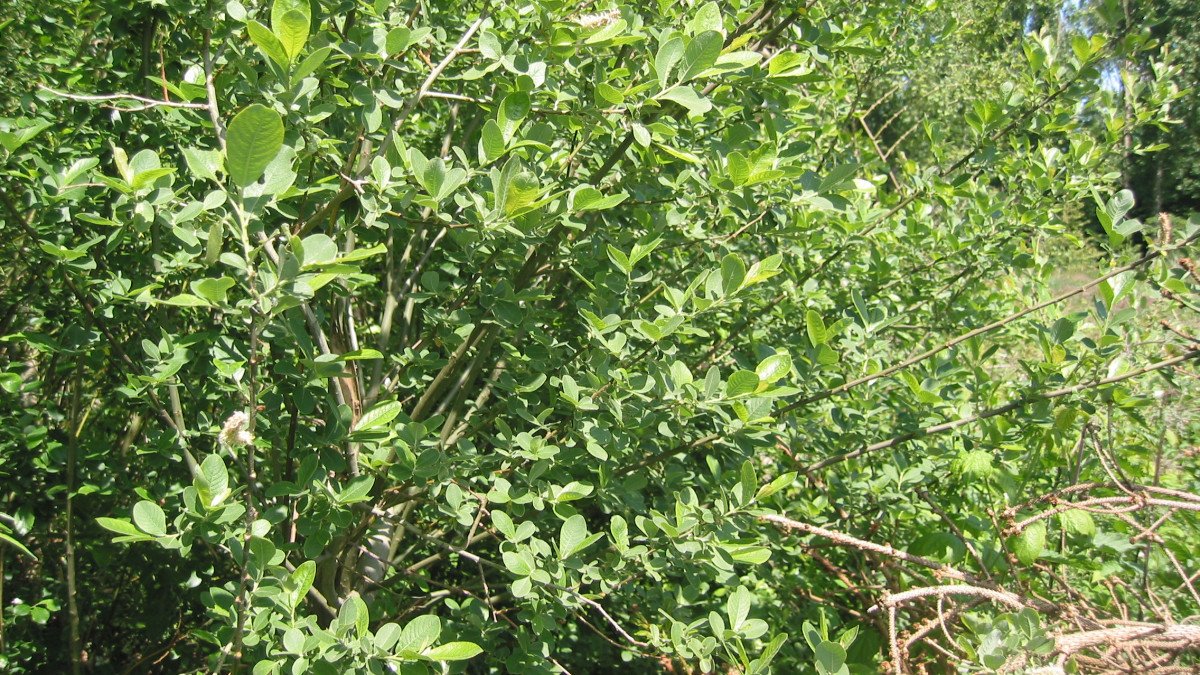
This is what an adult tree Willow (Grey) looks like
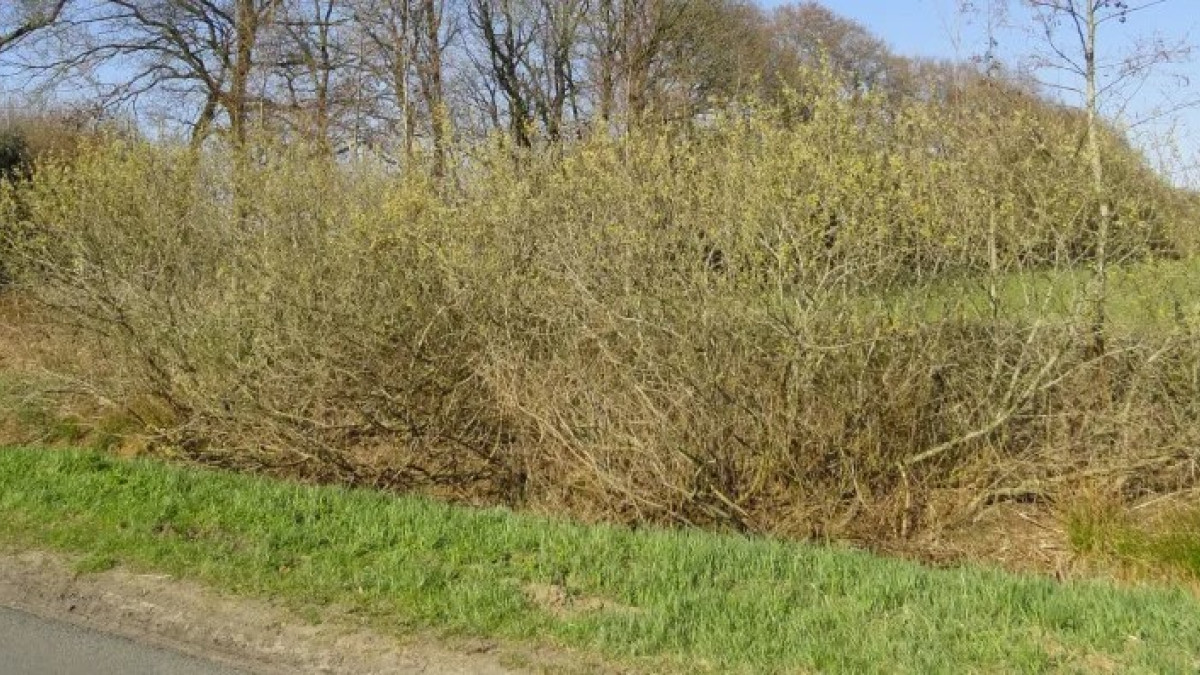
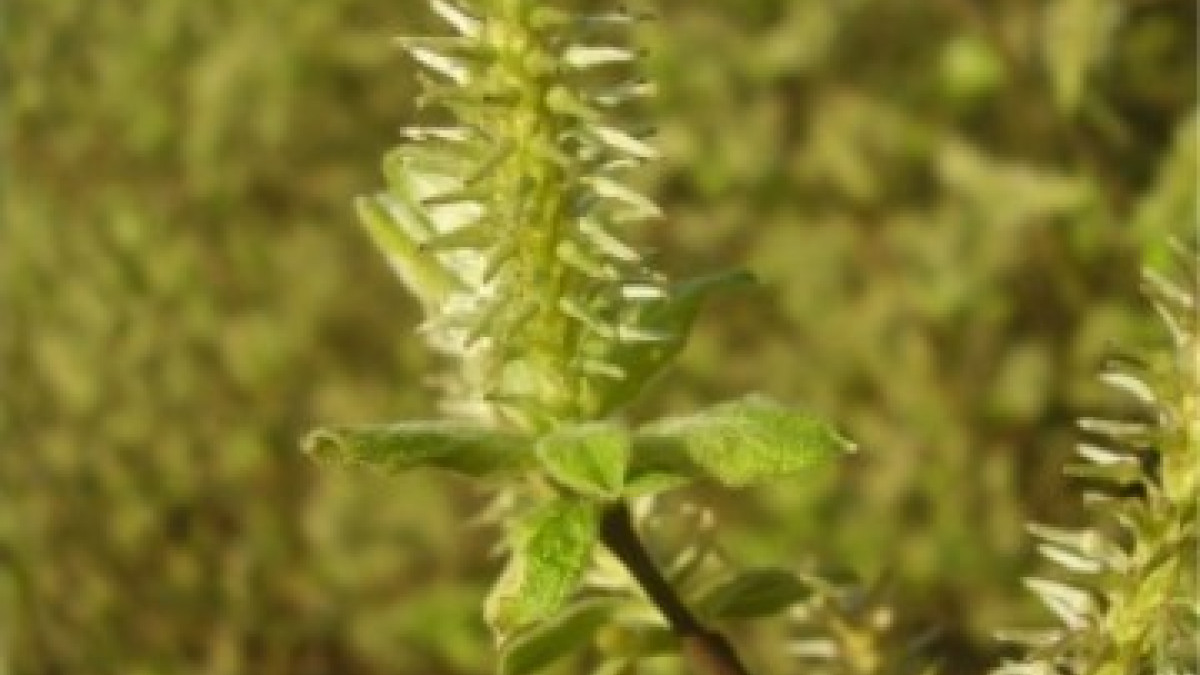
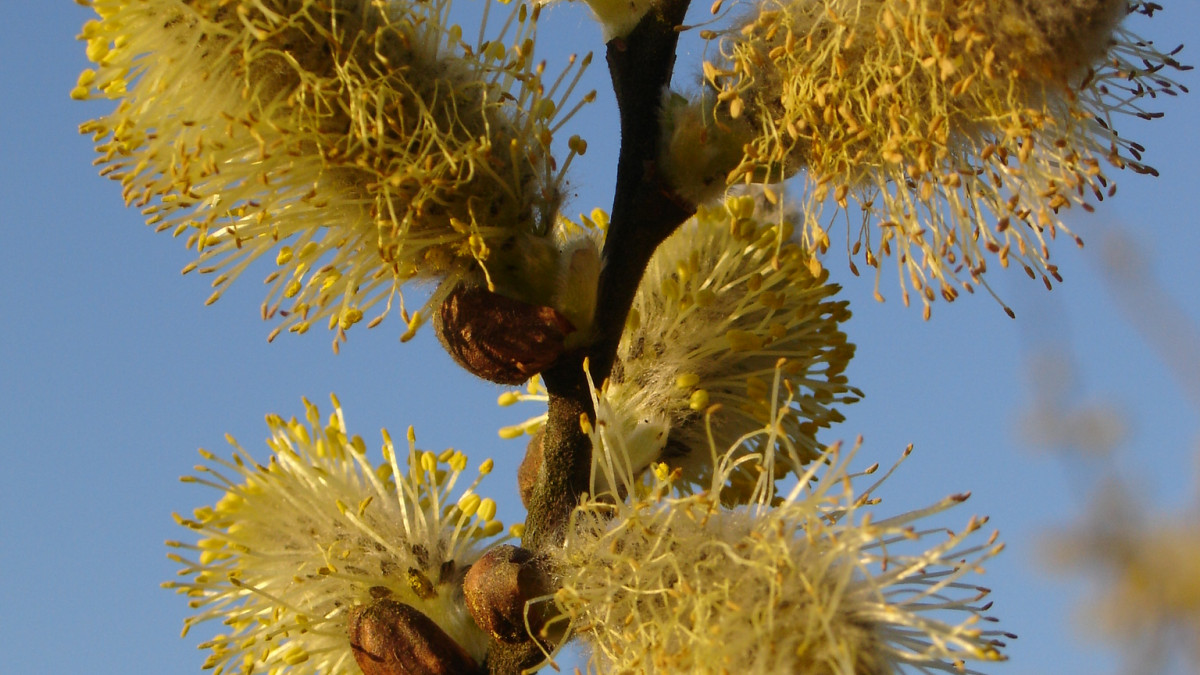
This is what a Willow (Grey) in bloom looks like
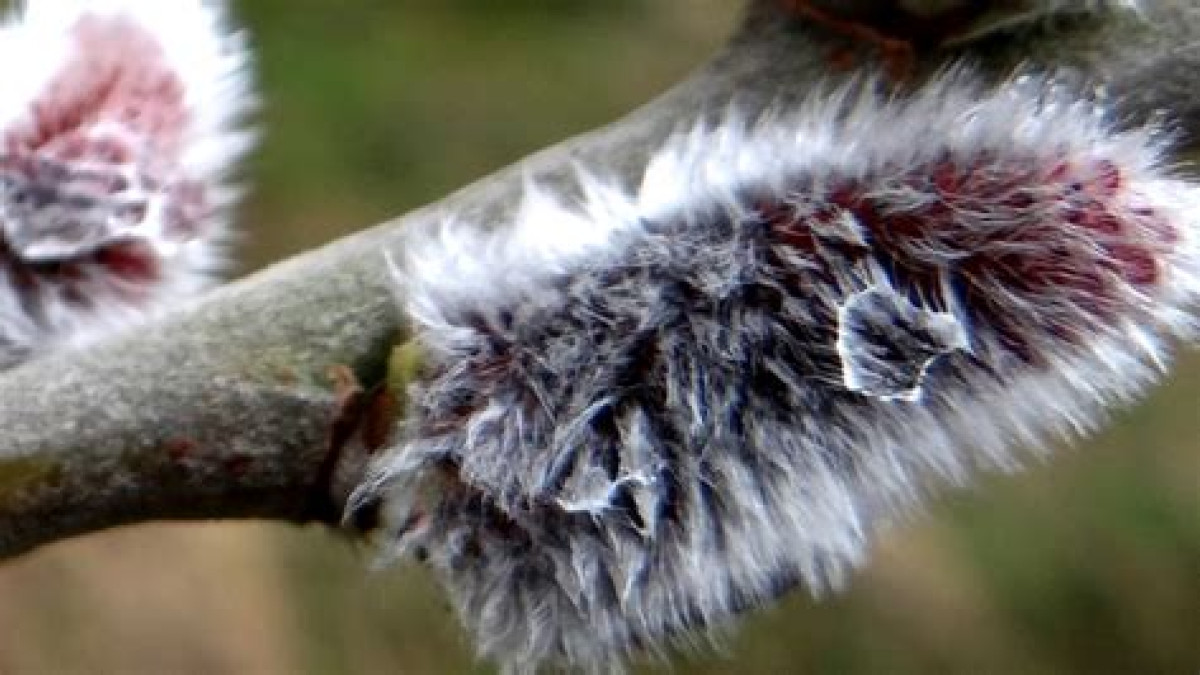
This is what the leaf of a Willow (Grey) looks like