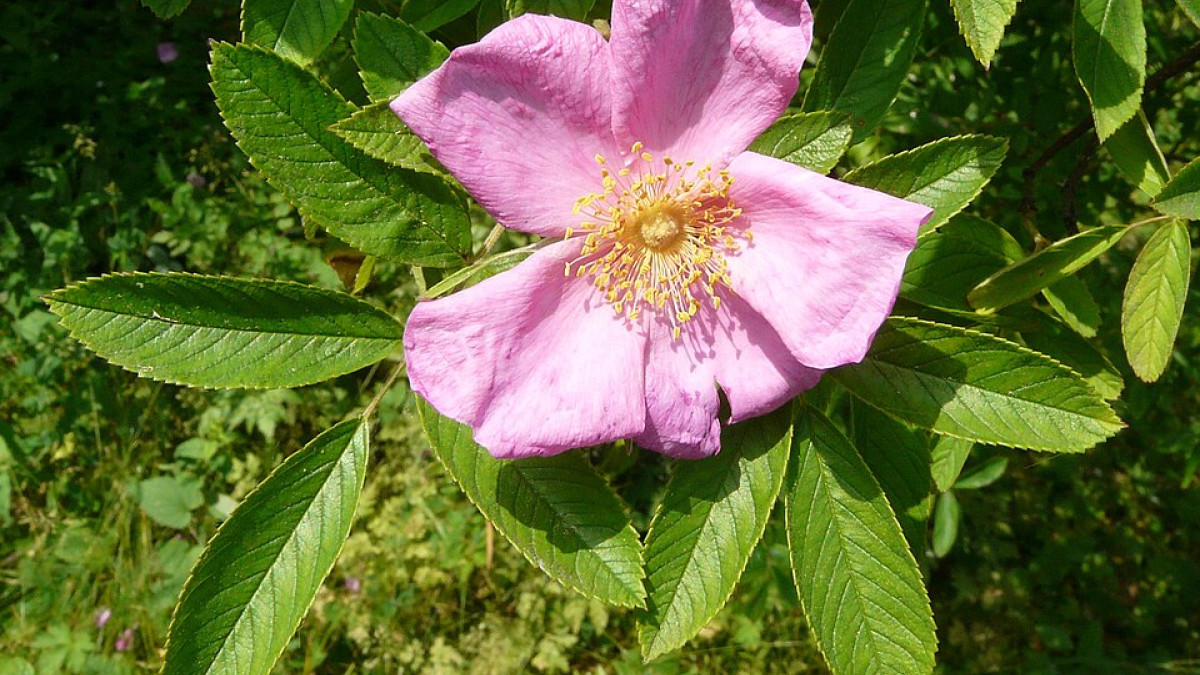




Round-leaved Dog-rose

General characteristics of a Round-leaved Dog-rose
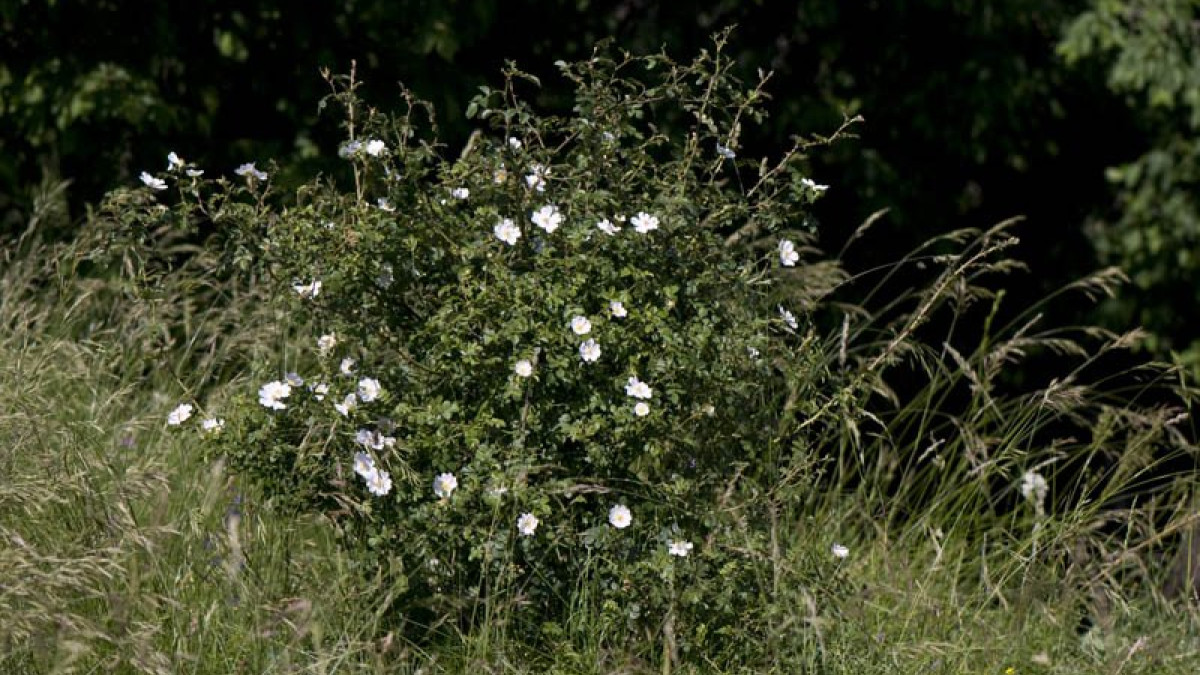
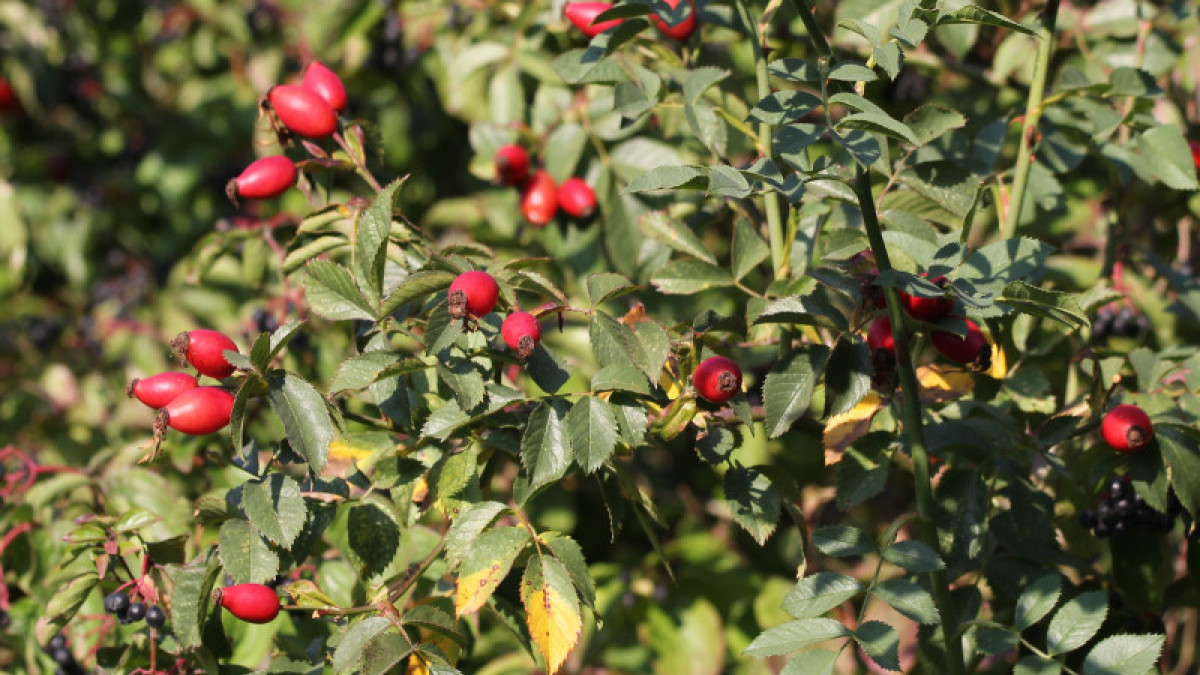
De beklierde heggenroos is een wilde roos met geurige bladeren en opvallende roze bloemen in de zomer. De struik wordt 1–3 meter hoog en groeit vaak in heggen, bosranden en open veld. Kenmerkend zijn de gekroesde, donkergroene blaadjes met klierharen, die een geur van appelachtig aroma verspreiden bij aanraking. De bloemen zijn enkel, zachtroze tot bleekroze, met geel hart en vele meeldraden. Na de bloei ontstaan feloranje tot rode bottels die voedsel bieden voor vogels. De struik is winterhard, droogtetolerant en verdraagt zonnige, goed doorlatende bodem.
Characteristics
How to plant a Round-leaved Dog-rose
Plant de heggenroos op een zonnige tot licht beschaduwde plek met goed doorlatende bodem. Graaf een plantgat van minstens 50x50 cm, los de grond en meng compost of goed verteerde mest door de aarde. Plaats de plant op dezelfde diepte als in de pot of kwekerij, zodat de basis van de takken net boven de grond ligt. Houd een afstand van 1–1,5 meter tussen struiken aan bij een heg of border. Geef na het planten voldoende water en druk de grond goed aan. Mulch rondom de voet om vocht vast te houden en wortelrot te voorkomen.
How to harvest a Round-leaved Dog-rose
Deze struik wordt niet of nauwelijks geoogst. Het is een bedreigde soort, en is voornamelijk beschikbaar uit speciale opkweek van de laatste zaden.
Caring for and pruning your Round-leaved Dog-rose
Snoei de heggenroos in late winter of vroege lente om oude, zieke of kruisende takken te verwijderen. Dun de struik uit voor luchtcirculatie en een open structuur, wat ziekten voorkomt. De plant is droogtetolerant, maar jonge struiken profiteren van regelmatig water geven bij droge periodes. Een lichte organische mest in voorjaar bevordert bloei en groei. Controleer op plagen zoals bladluizen; bij sterke aantasting kan een biologische bestrijding nodig zijn. Verwijder eventueel overrijpe bottels om verjonging van de struik te stimuleren. Mulchen helpt vocht en voedingsstoffen vast te houden.
Where does a Round-leaved Dog-rose grow
De beklierde heggenroos (Rosa rubiginosa / R. eglanteria) groeit van nature in open, zonnige landschappen, vaak op de rand van bossen, in heggen, houtwallen, ruigten en bermen. Ze gedijt goed op goed doorlatende, matig vruchtbare zand- of leemgronden, maar kan ook op kalkrijke bodems voorkomen. De struik is tolerant voor droogte en wind, waardoor hij vaak in bosranden en open velden staat waar andere struiken moeilijk wortelen. Vochthoudende bodems vermijdt hij, omdat dat wortelrot kan veroorzaken. Door zijn structuur biedt hij beschutting en voedsel aan vogels, insecten en kleine zoogdieren, waardoor hij een belangrijk onderdeel vormt van rand- en heggenbiotopen.
General
| Origin |
Native
|
| Tree Type | Shrub |
Length and Age
| Length in about 10 years | 1 Up to 3 Meter |
| Reproductive Maturity in How Many Years | 2 Up to 7 year |
| Maximum Age | 70 Up to 100 year |
| Required Space | 1 Up to 2m2 |
| Growth Rate |
Reproduction
| Tree is Self-Pollinating | No |
| Reproduction Method | |
| Reproduction rate |
|
Reproduction rate
| 1. Very low reproduction rate. The plant hardly spreads, has few seeds or vegetative spread (e.g., trees with heavy seeds). |
| 2. Low reproduction rate. Spread via limited seed production or specific conditions required |
| 3. Average reproduction rate. Regular spread, depending on wind, water, or animals, at a moderate speed (e.g., dandelion). |
| 4. High reproduction rate. Many seeds and multiple spread strategies (wind, birds, vegetative). Quickly colonizes open spaces |
| 5. Very high reproduction rate. Invasive species that spread explosively over large distances (e.g., Japanese knotweed). |
Pruning Period
| This Tree is Evergreen | No |
| Summer | April tot May |
| Winter | January tot February |
| Leaf Shapes | Circle round |
| Easy to prune | Yes |
Bark Characteristics Seedling (50-200cm)
| Lenticels | Yes |
| Colour |
Bud Characteristics Seedling (50-200cm)
| Colour | |
| Bud Position |
Varied
|
| Bud Shape |
Pointed
Oval
|
Other
| Root | Information not available |
| Bloom | Information not available |
| Wind sensitivity |
Diseases
| Sensitive to the Following Diseases | Information not available |
Harvest/recognition in winter
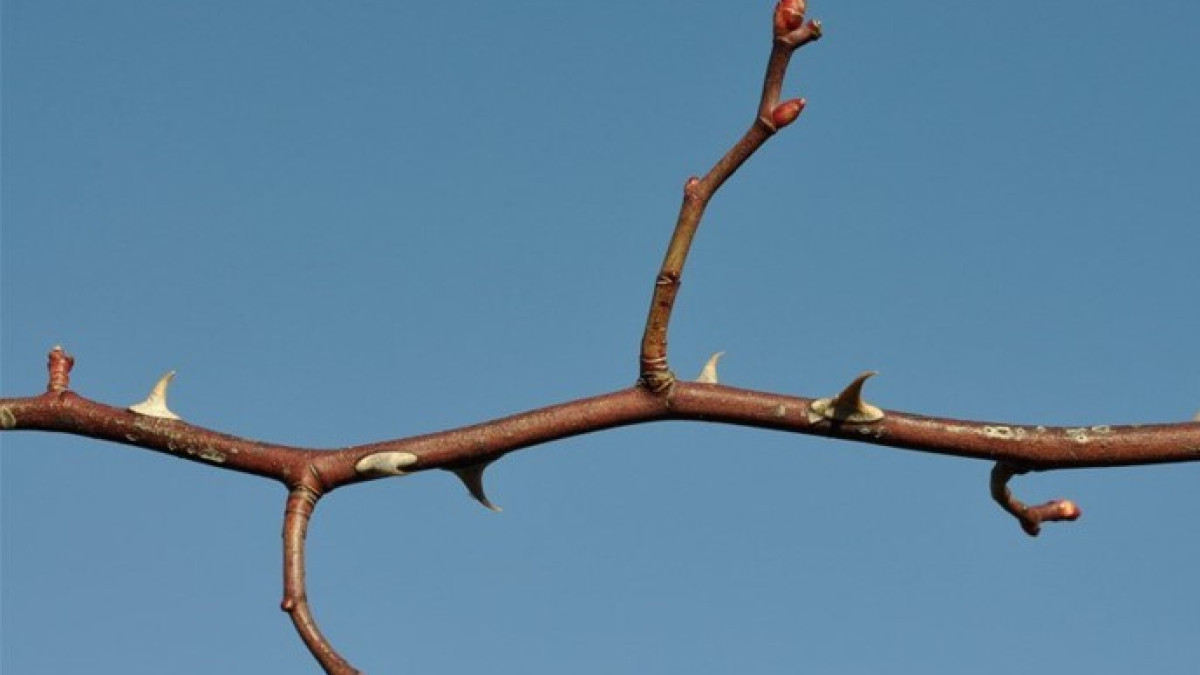
In de winter is de beklierde heggenroos te herkennen aan stijve, rechtopstaande takken met lange, gebogen doorns. De takken zijn lichtbruin tot roodbruin, met opvallende klierharen op jonge scheuten, die een zoete geur verspreiden bij aanraking. Soms blijven de rode tot oranje bottels van het vorige seizoen hangen, waardoor de struik voedsel biedt voor vogels. De knoppen staan afwisselend in de bladoksels, zijn klein, ovaal en viltig. Zonder bladeren en bloemen valt vooral de combinatie van doorns, geurige klierharen en overgebleven bottels op, waardoor de struik ook in het winterlandschap herkenbaar blijft.
Light requirement of the Round-leaved Dog-rose
Suitable soil types for the Round-leaved Dog-rose
| Soil type | Suitability |
|---|---|
| light clay |
|
| heavy clay |
|
| sand |
|
| peatland |
|
| Loam |
|
| Moerig op zand |
|
| Lichte zavel |
|
| Zware zavel |
|
Humidity
Suitable acidity level for the Round-leaved Dog-rose
Nutritional needs of the Round-leaved Dog-rose
| 1. | Very nutrient-poor soil |
| 2. | Very nutrient-poor to nutrient-poor soil |
| 3. | Nutrient-poor soil |
| 4. | Nutrient-poor to moderately nutrient-rich soil |
| 5. | Moderately nutrient-rich soil |
| 6. | Moderately nutrient-rich to nutrient-rich soil |
| 7. | Nutrient-rich soil |
| 8. | Extremely nutrient-rich soil |
| 9. | Very extremely nutrient-rich soil |
Humidity
| 1. | Extremely dry soils |
| 2. | Extremely dry to dry soils |
| 3. | Dry soils |
| 4. | Dry to dry/moist soils |
| 5. | Dry/moist soils |
| 6. | Dry/moist to moist soils |
| 7. | Moist soils |
| 8. | Moist to wet soils |
| 9. | Wet soils |
To be applied in landscapes
| Landscape | Suitability |
|---|---|
| Agroforestry |
|
| Hedge |
|
| Hedge |
|
| Forest |
|
| Feeding hedge |
|
| Back yard |
|
| Small back yard |
|
| Solitary |
|
| Wood wall |
|
Cultural-historical value
Insects
| How many insects typically live on this tree/plant? | 100 |
| Which insect groups live on this tree/plant? |
|
| Are there insects dependent on this species? | No |
| Which insect species are dependent on this tree/plant? |
Birds
| Average number of birds per tree/plant? | 10 |
| Which bird groups live on this tree/plant? |
|
Mammals
| Average number of mammals per tree/plant? | 6 |
| Which mammal groups live on this tree/plant? |
|
| Are there mammals dependent on this species? | No |
| Which mammal species are dependent on this tree/plant? |
Bloom Period
| Summer | August Up to August |
Tree Species
| Tree species that this tree prefers to grow with |
English Oak
Beech
Alder (black)
Hawthorn (single seed)
Blackthorn
Elder
|
Suitable for mammals?
| Mammal | Suitability |
|---|---|
| Human |
|
| Horse |
|
| Cow |
|
| Pig |
|
| Chicken |
|
| Goat |
|
| Sheep |
|
| Herbivorous rodents |
|
| Dog |
|
| Cat |
|
| Foxes |
|
| Badgers |
|
| Ferret |
|
| Mouse |
|
| Squirrel |
|
| Wild boar |
|
| Deer |
|
| Roe deer |
|
| Beavers |
|
| Bats |
|
Explanation
Explanation
Edibility
- Toxic: This tree or shrub is toxic to mammals and absolutely unsuitable for consumption.
- Very unsuitable: This tree or shrub is unsuitable for consumption by mammals and can be harmful.
- Unsuitable: This tree or shrub is generally unsuitable for consumption by mammals and can have adverse effects.
- Moderately suitable: This tree or shrub is moderately suitable as food for mammals, possibly with certain risks or limitations.
- Suitable: This tree or shrub is generally suitable as food for mammals, with little to no risks.
- Very suitable: This tree or shrub is very suitable as food for mammals, safe, and of high nutritional value.
Trunk Height
Average Trunk Height (hg) of the basal area median tree
Information not available
Trunk Diameter
(dg) (1.30m) of the basal area median tree.
Information not available
Aboveground Biomass
in whole kgInformation not available
Belowground Biomass
in whole kgInformation not available
Substance Binder
Information not available
Carbon Attraction (kf)
| (dg) (1.30m) of the basal area median tree | Deciduous Trees (Kf = 0,48) |
Warming Resistance
| This tree is well resistant to the warming (plus 3 degrees) of our climate and fits into the future of our climate (heat and drought resistant). | No |
This is what an adult tree Round-leaved Dog-rose looks like
This is what the fruits of a Round-leaved Dog-rose look like
This is what a Round-leaved Dog-rose in bloom looks like