



Perenboom (wilde)

General characteristics of a Perenboom (wilde)
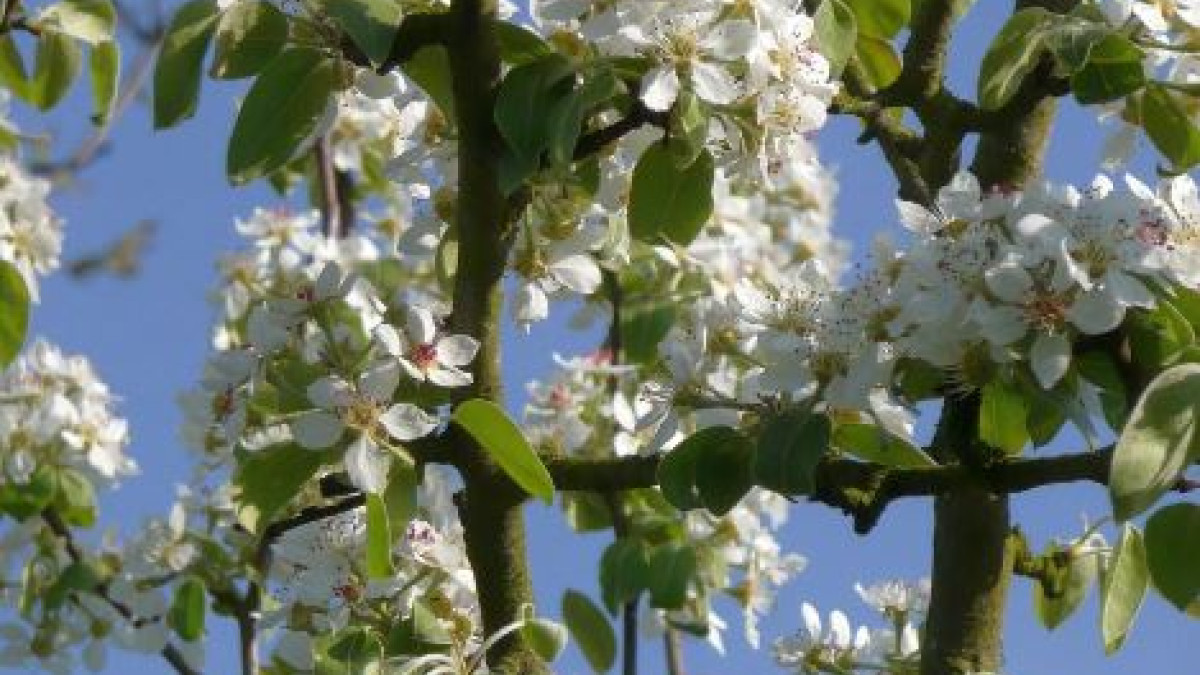
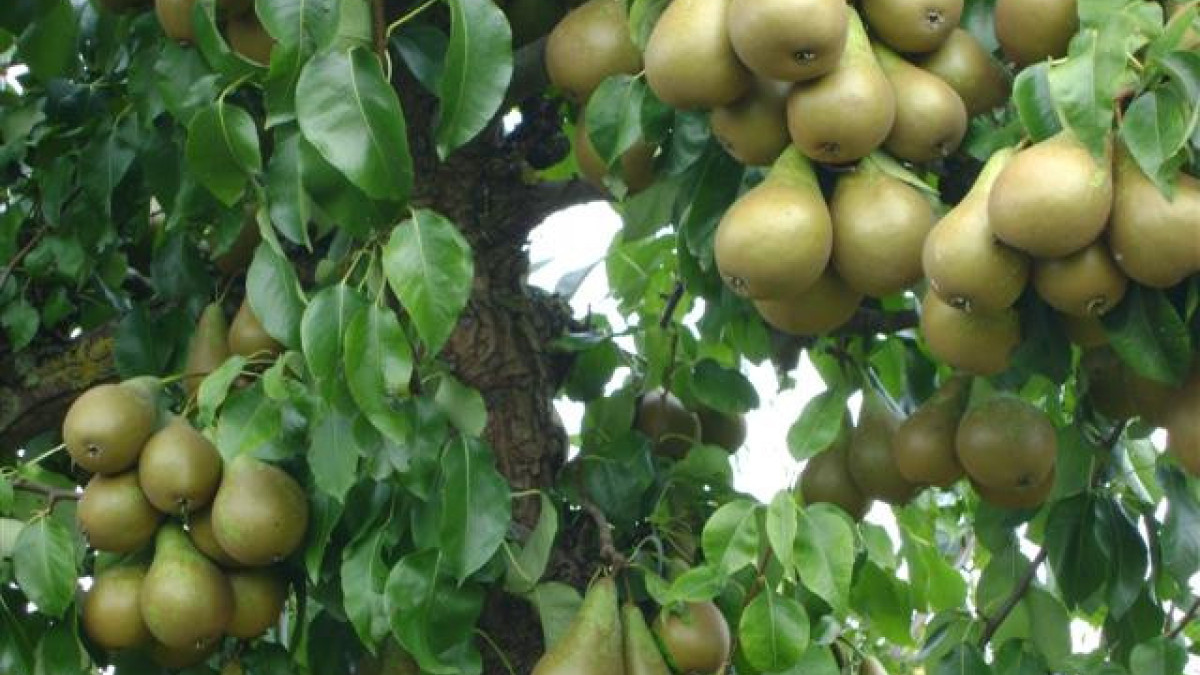
De gewone peer is een inheemse soort. De soort groeit uit tot een middelgrote boom met een rechte stam en een brede kroon. In het voorjaar verschijnen witte bloesems die veel insecten aantrekken. In de nazomer en herfst ontwikkelen zich peren die door mensen, vogels en zoogdieren kunnen worden gegeten.
Characteristics
How to plant a Perenboom (wilde)
Plant de zaailing op een zonnige plek in losse, goed doorlatende grond. Graaf een ruim plantgat zodat de wortels voldoende ruimte hebben. Plaats de boom op dezelfde diepte als waarop hij groeide en druk de grond na het planten licht aan. Geef direct water zodat de wortels goed contact maken met de bodem.
How to harvest a Perenboom (wilde)
Zaailingen kunnen worden geoogst tijdens de winterrust, van november tot maart. Steek de zaailing ruim uit zodat zoveel mogelijk wortels behouden blijven. Voorkom dat de wortels uitdrogen en bewaar ze vochtig tot aan het uitplanten.
Caring for and pruning your Perenboom (wilde)
Jonge bomen hebben in de eerste jaren extra aandacht nodig tijdens droge periodes. Houd de directe omgeving van de stam vrij van sterke begroeiing zodat de boom voldoende licht, water en voeding krijgt. Bescherm jonge aanplant indien nodig tegen vraat door wild of vee. Zodra de boom goed is aangeslagen vraagt hij weinig onderhoud.
Where does a Perenboom (wilde) grow
De gewone peer groeit het best op voedselrijke, goed doorlatende bodems. De soort komt voor in boomgaarden, houtwallen, erfbeplantingen, bosranden en struweel. Verwilderde exemplaren worden regelmatig aangetroffen op voormalige erven en langs wegen. De boom houdt van zon en verdraagt droge omstandigheden redelijk goed.
General
| Origin |
Native
|
| Tree Type | Deciduous tree |
Length and Age
| Length in about 10 years | 3 Up to 6 Meter |
| Reproductive Maturity in How Many Years | 5 Up to 15 year |
| Maximum Age | 80 Up to 250 year |
| Required Space | 25 Up to 100m2 |
| Growth Rate |
Reproduction
| Tree is Self-Pollinating | No |
| Reproduction Method | |
| Reproduction rate |
|
Reproduction rate
| 1. Very low reproduction rate. The plant hardly spreads, has few seeds or vegetative spread (e.g., trees with heavy seeds). |
| 2. Low reproduction rate. Spread via limited seed production or specific conditions required |
| 3. Average reproduction rate. Regular spread, depending on wind, water, or animals, at a moderate speed (e.g., dandelion). |
| 4. High reproduction rate. Many seeds and multiple spread strategies (wind, birds, vegetative). Quickly colonizes open spaces |
| 5. Very high reproduction rate. Invasive species that spread explosively over large distances (e.g., Japanese knotweed). |
Pruning Period
| This Tree is Evergreen | No |
| Summer | June tot August |
| Winter | Information not available |
| Leaf Shapes | Circle round |
| Easy to prune | Yes |
Bark Characteristics Seedling (50-200cm)
| Lenticels | Yes |
| Colour |
Bud Characteristics Seedling (50-200cm)
| Colour | |
| Bud Position |
Adjacent
Varied
At the end
|
| Bud Shape |
Pointed
Fusiform
|
Other
| Root | Information not available |
| Bloom | Information not available |
| Wind sensitivity |
Diseases
| Sensitive to the Following Diseases | Information not available |
Harvest/recognition in winter
In de winter zijn de afwisselend geplaatste knoppen een belangrijk kenmerk. Deze zijn spits, bruin en liggen dicht tegen de twijg aan. De jonge twijgen zijn glad en glanzend bruin tot grijsbruin. Zaailingen hebben vaak een rechte hoofdstengel en soms korte stekelachtige zijtakjes.
Light requirement of the Perenboom (wilde)
Suitable soil types for the Perenboom (wilde)
| Soil type | Suitability |
|---|---|
| light clay |
|
| heavy clay |
|
| sand |
|
| peatland |
|
| Loam |
|
| Moerig op zand |
|
| Lichte zavel |
|
| Zware zavel |
|
Humidity
Suitable acidity level for the Perenboom (wilde)
Nutritional needs of the Perenboom (wilde)
| 1. | Very nutrient-poor soil |
| 2. | Very nutrient-poor to nutrient-poor soil |
| 3. | Nutrient-poor soil |
| 4. | Nutrient-poor to moderately nutrient-rich soil |
| 5. | Moderately nutrient-rich soil |
| 6. | Moderately nutrient-rich to nutrient-rich soil |
| 7. | Nutrient-rich soil |
| 8. | Extremely nutrient-rich soil |
| 9. | Very extremely nutrient-rich soil |
Humidity
| 1. | Extremely dry soils |
| 2. | Extremely dry to dry soils |
| 3. | Dry soils |
| 4. | Dry to dry/moist soils |
| 5. | Dry/moist soils |
| 6. | Dry/moist to moist soils |
| 7. | Moist soils |
| 8. | Moist to wet soils |
| 9. | Wet soils |
To be applied in landscapes
| Landscape | Suitability |
|---|---|
| Agroforestry |
|
| Hedge |
|
| Hedge |
|
| Forest |
|
| Feeding hedge |
|
| Back yard |
|
| Small back yard |
|
| Solitary |
|
| Wood wall |
|
Cultural-historical value
Insects
| How many insects typically live on this tree/plant? | |
| Which insect groups live on this tree/plant? |
Bees
Butterflies
Hoverflies
Beetles
True bugs
Flies
Wasps
Common green bottle flies
Lice
Bumblebees
Mites
Mosquitoes
Ants
Ladybugs
Cicadas
|
| Are there insects dependent on this species? | No |
| Which insect species are dependent on this tree/plant? |
Yponomeuta padella
Early Moth
Hawthorn Shield Bug
Lochmaea crataegi
Micro moths
|
Birds
| Average number of birds per tree/plant? | 3 |
| Which bird groups live on this tree/plant? |
Eurasian chaffinches
tits
fieldfares
redwings
thrushes
European robins
common starlings
Hawfinches
common wood pigeons
song thrushes
|
Mammals
| Average number of mammals per tree/plant? | 3 |
| Which mammal groups live on this tree/plant? |
Squirrels
wild boars
roe deers
Mice
brown hares
European badgers
|
| Are there mammals dependent on this species? | No |
| Which mammal species are dependent on this tree/plant? |
Bloom Period
| Summer | April Up to May |
Tree Species
| Tree species that this tree prefers to grow with |
Hawthorn (single seed)
Pear (conference)
Apple
Linden
Hazelnut
|
Suitable for mammals?
| Mammal | Suitability |
|---|---|
| Human |
|
| Horse |
|
| Cow |
|
| Pig |
|
| Chicken |
|
| Goat |
|
| Sheep |
|
| Herbivorous rodents |
|
| Dog |
|
| Cat |
|
| Foxes |
|
| Badgers |
|
| Ferret |
|
| Mouse |
|
| Squirrel |
|
| Wild boar |
|
| Deer |
|
| Roe deer |
|
| Beavers |
|
| Bats |
|
Explanation
Explanation
Edibility
- Toxic: This tree or shrub is toxic to mammals and absolutely unsuitable for consumption.
- Very unsuitable: This tree or shrub is unsuitable for consumption by mammals and can be harmful.
- Unsuitable: This tree or shrub is generally unsuitable for consumption by mammals and can have adverse effects.
- Moderately suitable: This tree or shrub is moderately suitable as food for mammals, possibly with certain risks or limitations.
- Suitable: This tree or shrub is generally suitable as food for mammals, with little to no risks.
- Very suitable: This tree or shrub is very suitable as food for mammals, safe, and of high nutritional value.
Trunk Height
Average Trunk Height (hg) of the basal area median tree
Information not available
Trunk Diameter
(dg) (1.30m) of the basal area median tree.
Information not available
Aboveground Biomass
in whole kgInformation not available
Belowground Biomass
in whole kgInformation not available
Substance Binder
Information not available
Carbon Attraction (kf)
| (dg) (1.30m) of the basal area median tree | Deciduous Trees (Kf = 0,48) |
Warming Resistance
| This tree is well resistant to the warming (plus 3 degrees) of our climate and fits into the future of our climate (heat and drought resistant). | No |
This is what the fruits of a Perenboom (wilde) look like
This is what a Perenboom (wilde) in bloom looks like