



London plane tree

General characteristics of a London plane tree
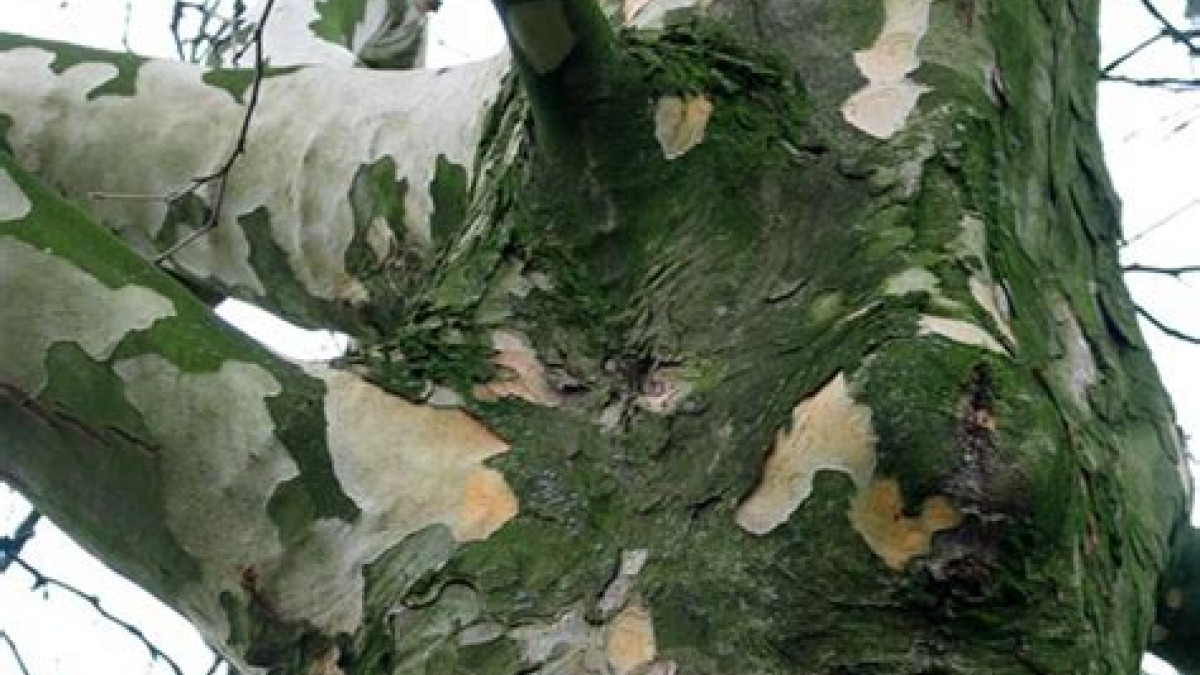
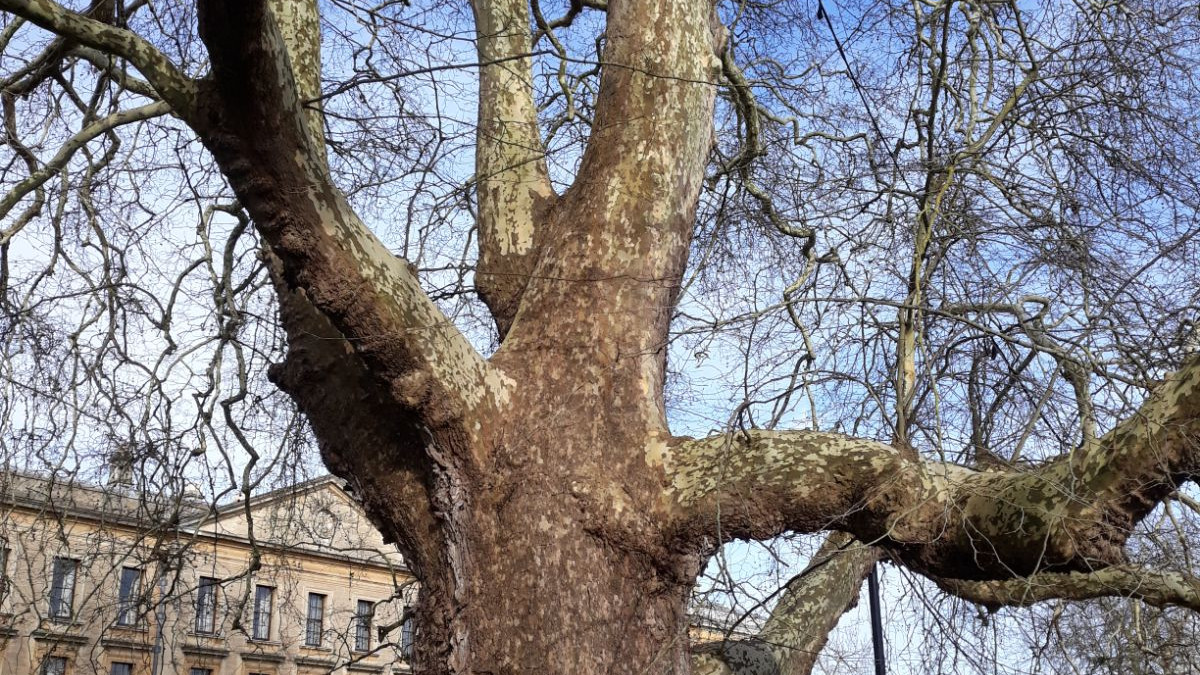
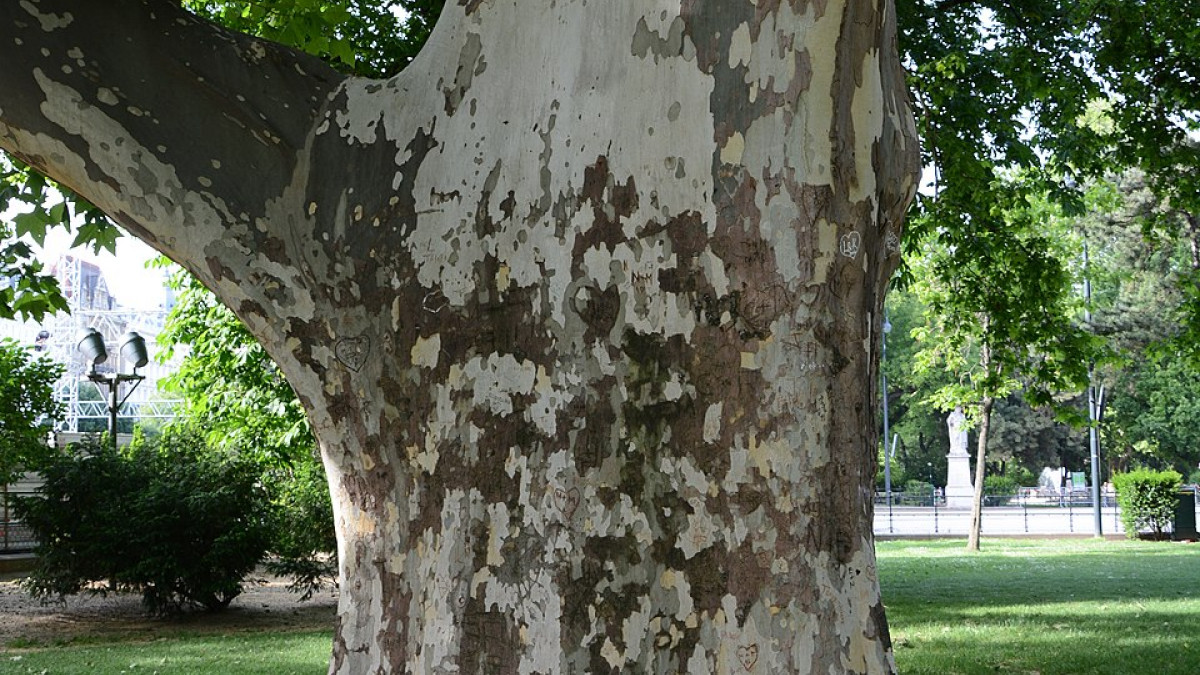
The plane tree is an impressive sight in the landscape, loved for its distinctive, mottled bark that renews itself every year. With its large, hand-shaped leaves, the plane tree offers not only visual beauty but also functional advantages. Plane trees are becoming increasingly common in towns and villages, often found in large squares or along busy streets. The tree is highly resistant to soil compaction and can grow well in places where other trees would struggle. The large leaves provide welcome shade in summer, making the plane tree a welcome companion on hot days. The plane tree is also often grown as an espalier tree in gardens and on terraces.
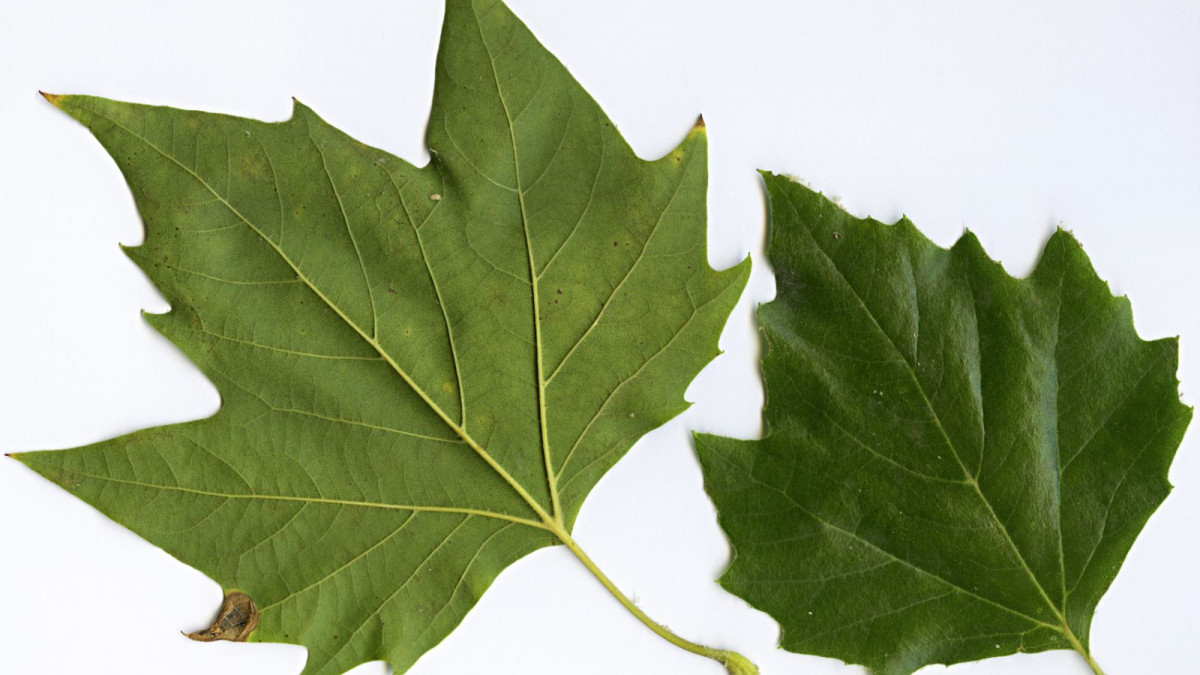
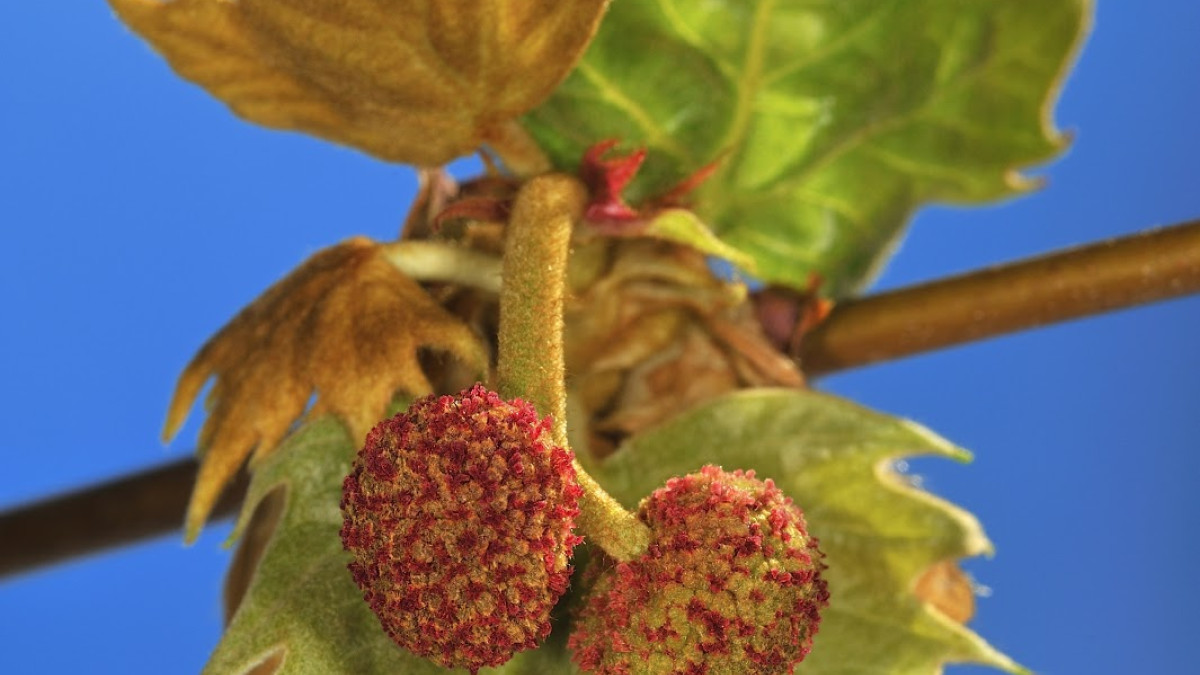
Characteristic of the common plane tree are its three- to five-lobed leaves, which have a sturdy, rough serrated edge. The leaves are shiny green on top and dull and paler underneath. The trees have male and female flowers that grow in catkins, with the male flowers being yellow in colour and the female flowers a carmine red hue.
There are two main types of plane tree in the Benelux, neither of which are native: the western plane tree (Platanus occidentalis), which originates from America, and the eastern plane tree (Platanus orientalis), which originates from the Balkans and Asia Minor. The London plane tree (Platanus x hispanica) is a hybrid of these two species.
Plane trees “filter” the air
Several studies have shown that plane trees (Platanus species) effectively reduce air pollution.
Characteristics
How to plant a London plane tree
Dig the planting hole a third deeper and wider than the roots. Make sure the planting hole is deep enough so that the taproot does not have to be laid to the side. Place the seedling in the hole, keeping it slightly higher than the final planting depth, rather than right at the bottom of the hole. Ultimately, the root collar should be at the boundary between soil and air. Some trees have small ridges on the root collar, which makes this easier. When placing the tree in the hole, keep it stable. The roots should not point upwards or twist during planting, otherwise the tree will become unstable or may strangle itself. Also, spread the roots out as much as possible. This will give the roots sufficient space to grow.
Fill the hole with moist, loose soil. Make sure that the soil that touches the hair roots (roots that are thinner than 1 millimetre) is well crumbled. Shake the tree slightly up and down so that the soil gets between the hair roots.
Place approximately 10 centimetres of soil above the hair roots and press lightly with your foot so that the roots can make good contact with the soil moisture.
For detailed planting instructions, see the planting guide on our website.
How to harvest a London plane tree
The plane tree has a taproot. To harvest the seedling, insert the spade straight down close to the trunk. Carefully make a circle around the plant by inserting the spade into the ground several times, so that you do not damage the taproot. Then lift the seedling out of the ground with a gentle levering motion. Make sure you dig out the taproot as completely as possible.
Caring for and pruning your London plane tree
The plane tree does not need to be pruned as a tree. In cities, however, you will see that it is crowned by pruning away the side branches, so that the tree can continue to grow neatly in the streets. It is best to prune a plane tree in the winter months or in early spring. If you choose early spring, this can be done in March and April. During these months, the tree can recover best and prepare for the warm months. If you prune the plane tree in summer, this can cause it to die.
The plane tree can also be pruned if you keep it as an espalier tree. In that case, prune the branches back to 1 to a maximum of 2 buds. Sometimes, pruning a branch back completely can also be an option. However, the tree will then have to work hard to sprout, which means that these branches will sprout later.
Where does a London plane tree grow
The plane tree originates from forests along rivers, where it grows on nutrient-rich and moist soils. Here it shares its habitat with other trees such as poplars, alders and willows. Although the plane tree thrives best in these moist conditions, it is surprisingly able to tolerate drought, making it very suitable for urban environments. The tree does not have high demands on soil type, but on calcareous soils it can suffer from drought, which can hinder its growth.
General
| Origin |
Alien
|
| Tree Type | Deciduous tree |
Length and Age
| Length in about 10 years | 8 Up to 12 Meter |
| Reproductive Maturity in How Many Years | 20 Up to 25 year |
| Maximum Age | 200 Up to 400 year |
| Required Space | 100 Up to 120m2 |
| Growth Rate |
Reproduction
| Tree is Self-Pollinating | Yes |
| Reproduction Method |
To cut (cutting is between 5 and 50 cm)
Makes seedlings
|
| Reproduction rate |
|
Reproduction rate
| 1. Very low reproduction rate. The plant hardly spreads, has few seeds or vegetative spread (e.g., trees with heavy seeds). |
| 2. Low reproduction rate. Spread via limited seed production or specific conditions required |
| 3. Average reproduction rate. Regular spread, depending on wind, water, or animals, at a moderate speed (e.g., dandelion). |
| 4. High reproduction rate. Many seeds and multiple spread strategies (wind, birds, vegetative). Quickly colonizes open spaces |
| 5. Very high reproduction rate. Invasive species that spread explosively over large distances (e.g., Japanese knotweed). |
Pruning Period
| This Tree is Evergreen | Yes |
| Summer | No pruning in summer |
| Winter | October tot March |
| Leaf Shapes | Palmately lobed |
| Easy to prune | Yes |
Bark Characteristics Seedling (50-200cm)
| Lenticels | Yes |
| Colour |
Bud Characteristics Seedling (50-200cm)
| Colour | |
| Bud Position |
Varied
|
| Bud Shape |
Fusiform
|
Other
| Root |
Deeply rooted
|
| Bloom |
Has fruits
Has catkins
|
| Wind sensitivity | Moderately sensitive to (sea) wind |
Diseases
| Sensitive to the Following Diseases |
Leaf spot disease
Massaria
|
Harvest/recognition in winter
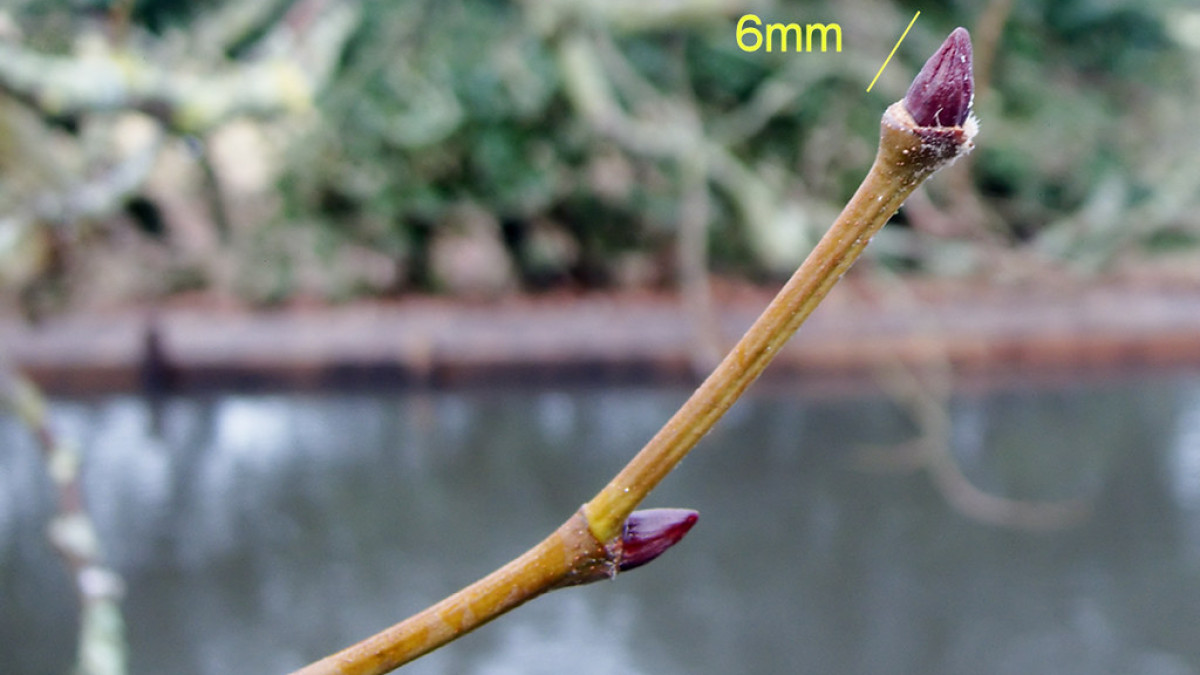
The buds are cone-shaped, reddish brown, and have a large protruding base. They are 6-8 mm in size.
The bark is smooth, thin and greyish brown. Flaking causes greenish or yellow spots to appear, which often make the tree easy to recognise. The plane tree has pale green twigs, which later become sturdy and brown in colour.
Light requirement of the London plane tree
Suitable soil types for the London plane tree
| Soil type | Suitability |
|---|---|
| light clay |
|
| heavy clay |
|
| sand |
|
| peatland |
|
| Loam |
|
| Moerig op zand |
|
| Lichte zavel |
|
| Zware zavel |
|
Humidity
Suitable acidity level for the London plane tree
Nutritional needs of the London plane tree
| 1. | Very nutrient-poor soil |
| 2. | Very nutrient-poor to nutrient-poor soil |
| 3. | Nutrient-poor soil |
| 4. | Nutrient-poor to moderately nutrient-rich soil |
| 5. | Moderately nutrient-rich soil |
| 6. | Moderately nutrient-rich to nutrient-rich soil |
| 7. | Nutrient-rich soil |
| 8. | Extremely nutrient-rich soil |
| 9. | Very extremely nutrient-rich soil |
Humidity
| 1. | Extremely dry soils |
| 2. | Extremely dry to dry soils |
| 3. | Dry soils |
| 4. | Dry to dry/moist soils |
| 5. | Dry/moist soils |
| 6. | Dry/moist to moist soils |
| 7. | Moist soils |
| 8. | Moist to wet soils |
| 9. | Wet soils |
To be applied in landscapes
| Landscape | Suitability |
|---|---|
| Agroforestry |
|
| Hedge |
|
| Hedge |
|
| Forest |
|
| Feeding hedge |
|
| Back yard |
|
| Small back yard |
|
| Solitary |
|
| Wood wall |
|
Cultural-historical value
Insects
| How many insects typically live on this tree/plant? | |
| Which insect groups live on this tree/plant? |
|
| Are there insects dependent on this species? | No |
| Which insect species are dependent on this tree/plant? |
Birds
| Average number of birds per tree/plant? | |
| Which bird groups live on this tree/plant? |
|
Mammals
| Average number of mammals per tree/plant? | |
| Which mammal groups live on this tree/plant? |
|
| Are there mammals dependent on this species? | No |
| Which mammal species are dependent on this tree/plant? |
Bloom Period
| Summer | May Up to June |
Tree Species
| Tree species that this tree prefers to grow with |
|
Suitable for mammals?
| Mammal | Suitability |
|---|---|
| Human |
|
| Horse |
|
| Cow |
|
| Pig |
|
| Chicken |
|
| Goat |
|
| Sheep |
|
| Herbivorous rodents |
|
| Dog |
|
| Cat |
|
| Foxes |
|
| Badgers |
|
| Ferret |
|
| Mouse |
|
| Squirrel |
|
| Wild boar |
|
| Deer |
|
| Roe deer |
|
| Beavers |
|
Explanation
Explanation
Edibility
- Toxic: This tree or shrub is toxic to mammals and absolutely unsuitable for consumption.
- Very unsuitable: This tree or shrub is unsuitable for consumption by mammals and can be harmful.
- Unsuitable: This tree or shrub is generally unsuitable for consumption by mammals and can have adverse effects.
- Moderately suitable: This tree or shrub is moderately suitable as food for mammals, possibly with certain risks or limitations.
- Suitable: This tree or shrub is generally suitable as food for mammals, with little to no risks.
- Very suitable: This tree or shrub is very suitable as food for mammals, safe, and of high nutritional value.
Trunk Height
Average Trunk Height (hg) of the basal area median tree
Information not available
Trunk Diameter
(dg) (1.30m) of the basal area median tree.
Information not available
Aboveground Biomass
in whole kgInformation not available
Belowground Biomass
in whole kgInformation not available
Substance Binder
| Which substances can be bound or absorbed? |
CO2
Particulate matter
|
Carbon Attraction (kf)
| (dg) (1.30m) of the basal area median tree | Deciduous Trees (Kf = 0,48) |
Warming Resistance
| This tree is well resistant to the warming (plus 3 degrees) of our climate and fits into the future of our climate (heat and drought resistant). | No |
CO2
| 0. | not filled in |
| 1. | no storage |
| 2. | low storage |
| 3. | moderate storage |
| 4. | high storage |
| 5. | very high storage |
Fine Dust
| 0. | not filled in |
| 1. | no capture capacity |
| 2. | low capture capacity |
| 3. | moderate capture capacity |
| 4. | high capture capacity |
| 5. | very high capture capacity |
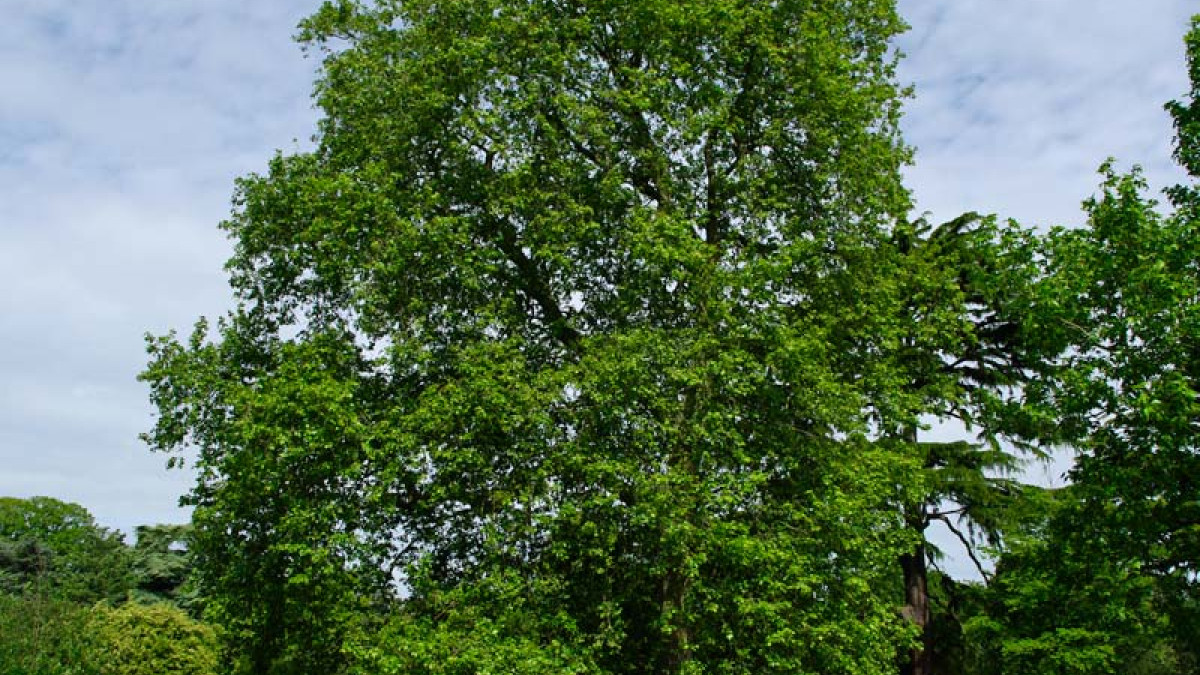
This is what an adult tree London plane tree looks like
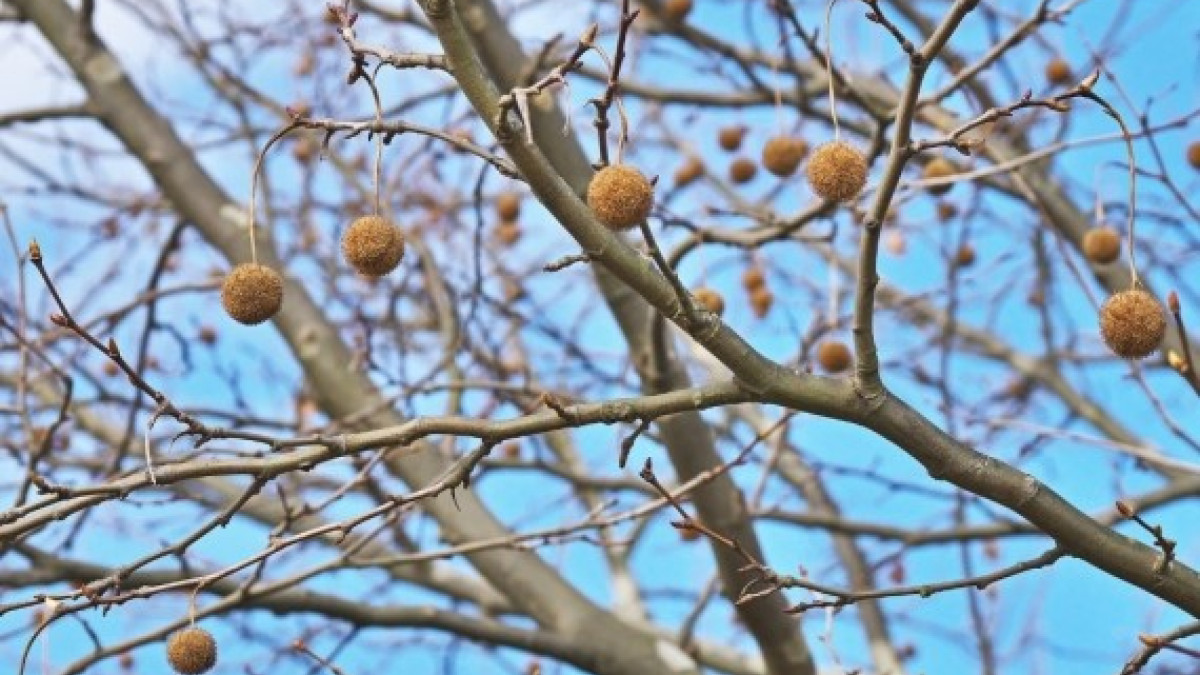
This is what the fruits of a London plane tree look like
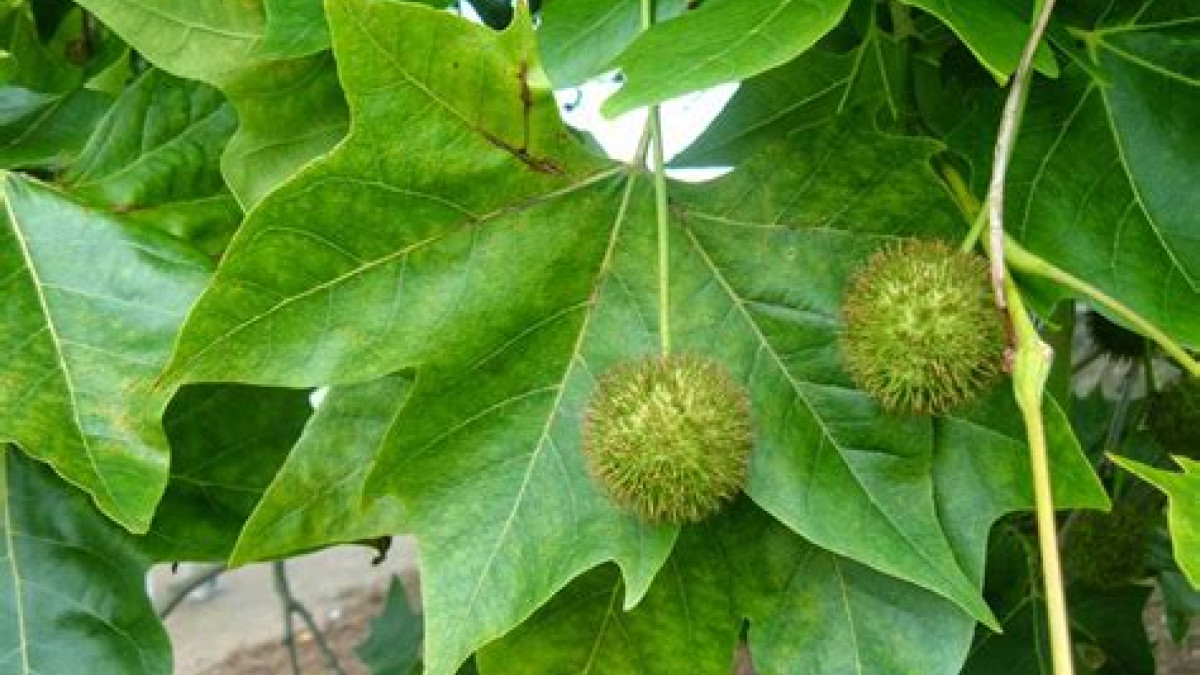
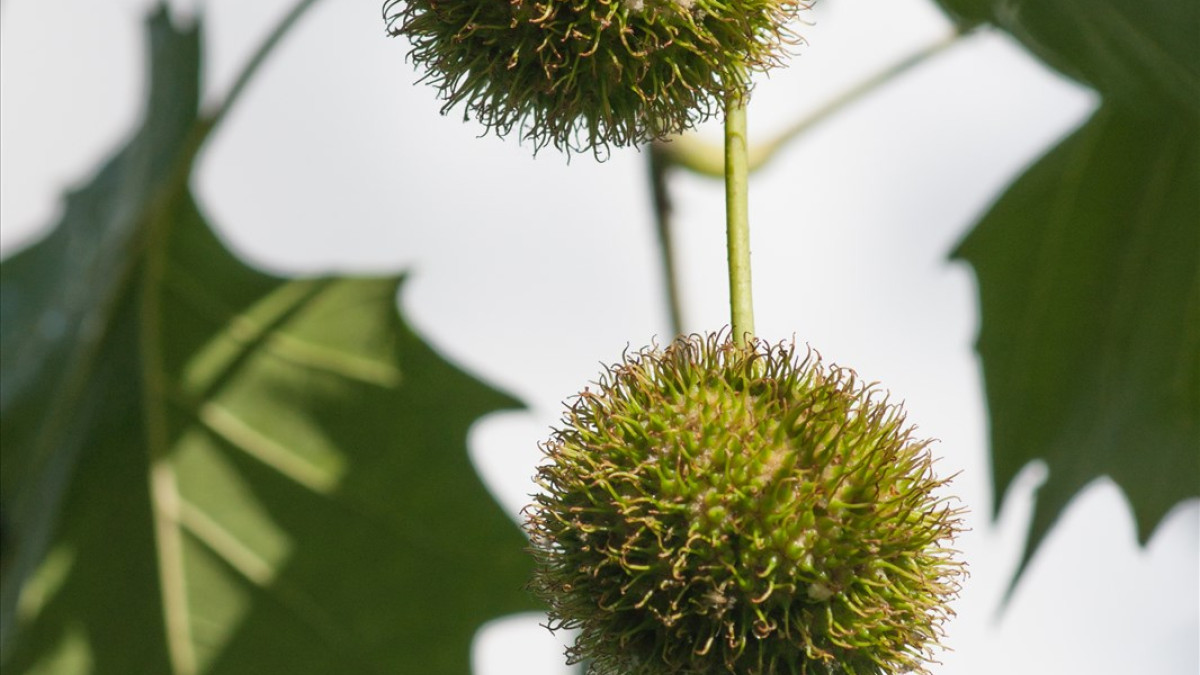
This is what a London plane tree in bloom looks like
This is what the bud of a London plane tree looks like
This is what the leaf of a London plane tree looks like