



Hazelnut

General characteristics of a Hazelnut
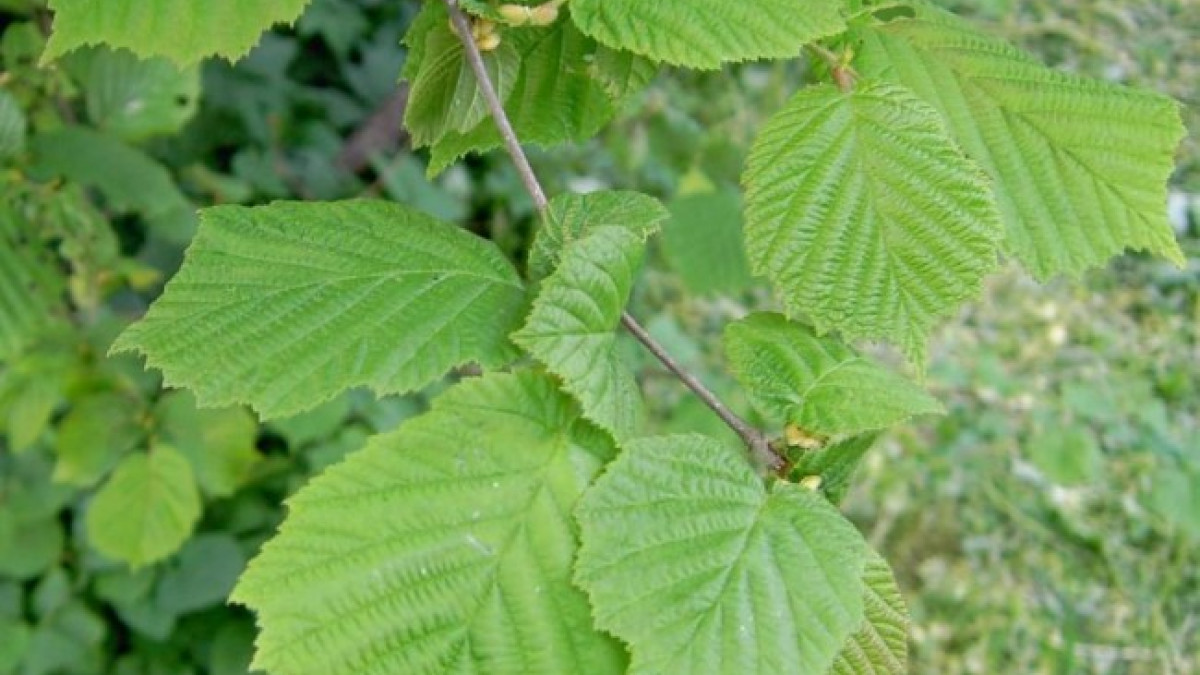
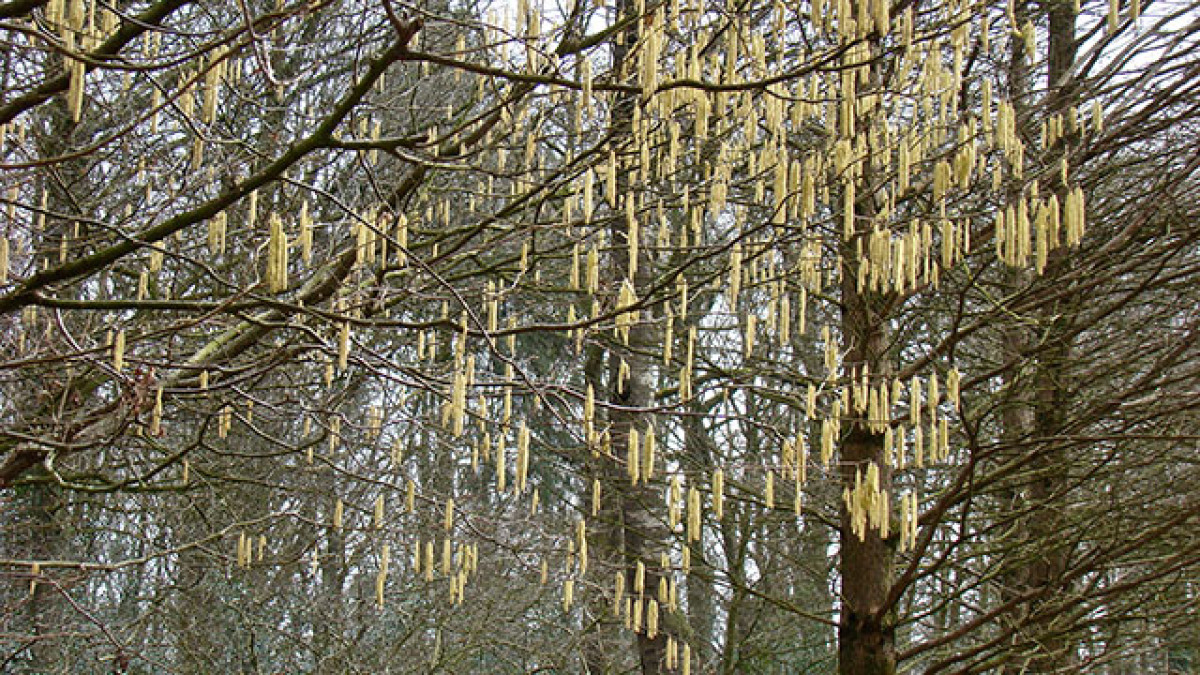
The shrub stands out in winter already because of its flowering catkins. It is the first plant species from our wild flora to start flowering in the year. Sometimes even before the turn of the year. The ovoid leaves that end in a pointed tip and have a serrated leaf edge do not appear until after flowering. The male “catkins” appear on the branches even before the leaves develop. When these have finished blooming, the female flowers appear in the buds of the branches. So the ovoid leaves that end in a pointed tip and have a serrated leaf edge do not appear until after flowering.
Hazels reproduce in part through wind pollination: pollen from a male flower travels with the wind and lands on the stigmas of a female flower.
By keeping male and female flowers from blooming at the same time, the hazel makes self-fertilization impossible. A clever reproductive strategy for strong offspring. Hazelnuts are not only eaten by humans, but are an important food source in winter for a number of animal species.
Characteristics
How to plant a Hazelnut
Roots at least 10 cm below ground level. Dig a planting hole 1.5 x as wide as the root system; make sure the roots are covered with soil; do not plant deeper than to where the stem begins
How to harvest a Hazelnut
Propagates from hazelnuts or reseeds; sometimes root shoots.
Caring for and pruning your Hazelnut
Pruning a hazel is necessary only for rejuvenation. You don't start pruning until after seven years; nothing needs to be done before then. Only when the hazel bush has reached its mature height after this time, grab the pruning shears in February (but not if it's freezing) or June. You can now prune away 1 or 2 thick stem branches, giving the new shoots room to grow again. You can drastically prune a mature Hazel without any problem. You also remove dead branches, in the way or crossing branches during pruning. Want to stimulate the growth of your Hazel? Then fertilize your shrub with humus-rich manure in the spring. In addition, sprinkle some lime around the trunk once every three years.
Where does a Hazelnut grow
Hazel likes a well-drained, humus-rich, compost-rich loose sandy soil. The trees are most common in: woods, deciduous forests, park forests and roads and forest roads), forest edges, hedgerows, thickets. Hazels prefer to grow in moderately nutrient-rich, moist and often calcareous soil. An ideal pH for hazels is between 6 and 7. Hazel also grows on more acidic soils (pH 5), but not on very acidic heath or peat soils.
General
| Origin |
Native
|
| Tree Type | Deciduous tree |
Length and Age
| Length in about 10 years | 2 Up to 4 Meter |
| Reproductive Maturity in How Many Years | 10 Up to 15 year |
| Maximum Age | Up to year |
| Required Space | 4 Up to 6m2 |
| Growth Rate | trees.medium |
Reproduction
| Tree is Self-Pollinating | No |
| Reproduction Method |
To cut (cutting is between 5 and 50 cm)
Makes seedlings
|
| Reproduction rate |
|
Reproduction rate
| 1. Very low reproduction rate. The plant hardly spreads, has few seeds or vegetative spread (e.g., trees with heavy seeds). |
| 2. Low reproduction rate. Spread via limited seed production or specific conditions required |
| 3. Average reproduction rate. Regular spread, depending on wind, water, or animals, at a moderate speed (e.g., dandelion). |
| 4. High reproduction rate. Many seeds and multiple spread strategies (wind, birds, vegetative). Quickly colonizes open spaces |
| 5. Very high reproduction rate. Invasive species that spread explosively over large distances (e.g., Japanese knotweed). |
Pruning Period
| This Tree is Evergreen | No |
| Summer | No pruning in summer |
| Winter | October tot March |
| Leaf Shapes | Egg-shaped |
| Easy to prune | Yes |
Bark Characteristics Seedling (50-200cm)
| Lenticels | Yes |
| Colour |
Bud Characteristics Seedling (50-200cm)
| Colour | |
| Bud Position |
Spread out
|
| Bud Shape |
Egg-shaped
|
Other
| Root |
Superficial rooting
|
| Bloom |
Has flowers
Has fruits
Has catkins
|
| Wind sensitivity | Sensitive to (sea) wind |
Diseases
| Sensitive to the Following Diseases |
Not particularly susceptible to any specific disease
|
Harvest/recognition in winter
Straight brown branches + large egg-shaped brown/green buds scattered.
Light requirement of the Hazelnut
Suitable soil types for the Hazelnut
| Soil type | Suitability |
|---|---|
| light clay |
|
| heavy clay |
|
| sand |
|
| peatland |
|
| Loam |
|
| Moerig op zand |
|
| Lichte zavel |
|
| Zware zavel |
|
Humidity
Suitable acidity level for the Hazelnut
Nutritional needs of the Hazelnut
| 1. | Very nutrient-poor soil |
| 2. | Very nutrient-poor to nutrient-poor soil |
| 3. | Nutrient-poor soil |
| 4. | Nutrient-poor to moderately nutrient-rich soil |
| 5. | Moderately nutrient-rich soil |
| 6. | Moderately nutrient-rich to nutrient-rich soil |
| 7. | Nutrient-rich soil |
| 8. | Extremely nutrient-rich soil |
| 9. | Very extremely nutrient-rich soil |
Humidity
| 1. | Extremely dry soils |
| 2. | Extremely dry to dry soils |
| 3. | Dry soils |
| 4. | Dry to dry/moist soils |
| 5. | Dry/moist soils |
| 6. | Dry/moist to moist soils |
| 7. | Moist soils |
| 8. | Moist to wet soils |
| 9. | Wet soils |
To be applied in landscapes
| Landscape | Suitability |
|---|---|
| Agroforestry |
|
| Hedge |
|
| Hedge |
|
| Forest |
|
| Feeding hedge |
|
| Back yard |
|
| Small back yard |
|
| Solitary |
|
| Wood wall |
|
Cultural-historical value
Insects
| How many insects typically live on this tree/plant? | 106 |
| Which insect groups live on this tree/plant? |
Bees
Butterflies
Beetles
|
| Are there insects dependent on this species? | No |
| Which insect species are dependent on this tree/plant? |
Birds
| Average number of birds per tree/plant? | 25 |
| Which bird groups live on this tree/plant? |
Eurasian jays
tits
fieldfares
European robins
common blackbirds
bramblings
common linnets
dunnocks
|
Mammals
| Average number of mammals per tree/plant? | |
| Which mammal groups live on this tree/plant? |
Squirrels
wild boars
deer
roe deers
|
| Are there mammals dependent on this species? | No |
| Which mammal species are dependent on this tree/plant? |
Bloom Period
| Summer | August Up to March |
Tree Species
| Tree species that this tree prefers to grow with |
|
Suitable for mammals?
| Mammal | Suitability |
|---|---|
| Badgers |
|
| Squirrel |
|
| Ferret |
|
| Goat |
|
| Herbivorous rodents |
|
| Wild boar |
|
| Foxes |
|
| Pig |
|
| Sheep |
|
| Roe deer |
|
| Horse |
|
| Mouse |
|
| Human |
|
| Cow |
|
| Chicken |
|
| Cat |
|
| Dog |
|
| Deer |
|
| Beavers |
|
Explanation
Explanation
Edibility
- Toxic: This tree or shrub is toxic to mammals and absolutely unsuitable for consumption.
- Very unsuitable: This tree or shrub is unsuitable for consumption by mammals and can be harmful.
- Unsuitable: This tree or shrub is generally unsuitable for consumption by mammals and can have adverse effects.
- Moderately suitable: This tree or shrub is moderately suitable as food for mammals, possibly with certain risks or limitations.
- Suitable: This tree or shrub is generally suitable as food for mammals, with little to no risks.
- Very suitable: This tree or shrub is very suitable as food for mammals, safe, and of high nutritional value.
Trunk Height
Average Trunk Height (hg) of the basal area median tree
Information not available
Trunk Diameter
(dg) (1.30m) of the basal area median tree.
Information not available
Aboveground Biomass
in whole kgInformation not available
Belowground Biomass
in whole kgInformation not available
Substance Binder
| Which substances can be bound or absorbed? |
CO2
Particulate matter
|
Carbon Attraction (kf)
| (dg) (1.30m) of the basal area median tree | Deciduous Trees (Kf = 0,48) |
Warming Resistance
| This tree is well resistant to the warming (plus 3 degrees) of our climate and fits into the future of our climate (heat and drought resistant). | Yes |
CO2
| 0. | not filled in |
| 1. | no storage |
| 2. | low storage |
| 3. | moderate storage |
| 4. | high storage |
| 5. | very high storage |
Fine Dust
| 0. | not filled in |
| 1. | no capture capacity |
| 2. | low capture capacity |
| 3. | moderate capture capacity |
| 4. | high capture capacity |
| 5. | very high capture capacity |
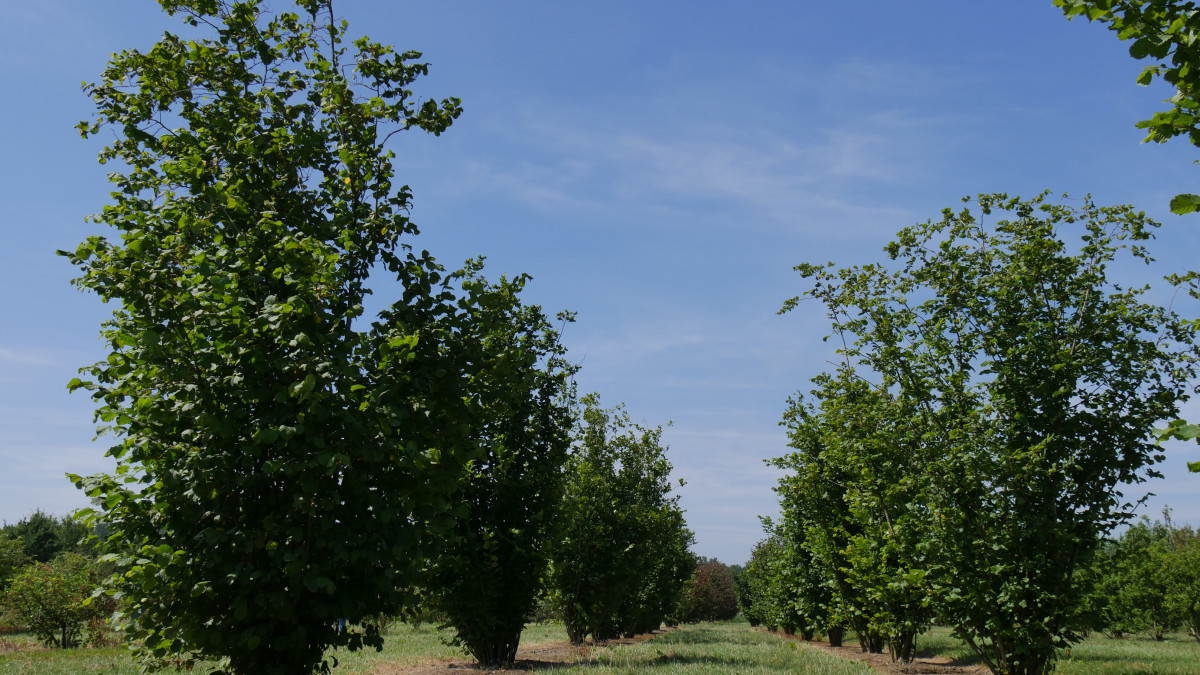
This is what an adult tree Hazelnut looks like
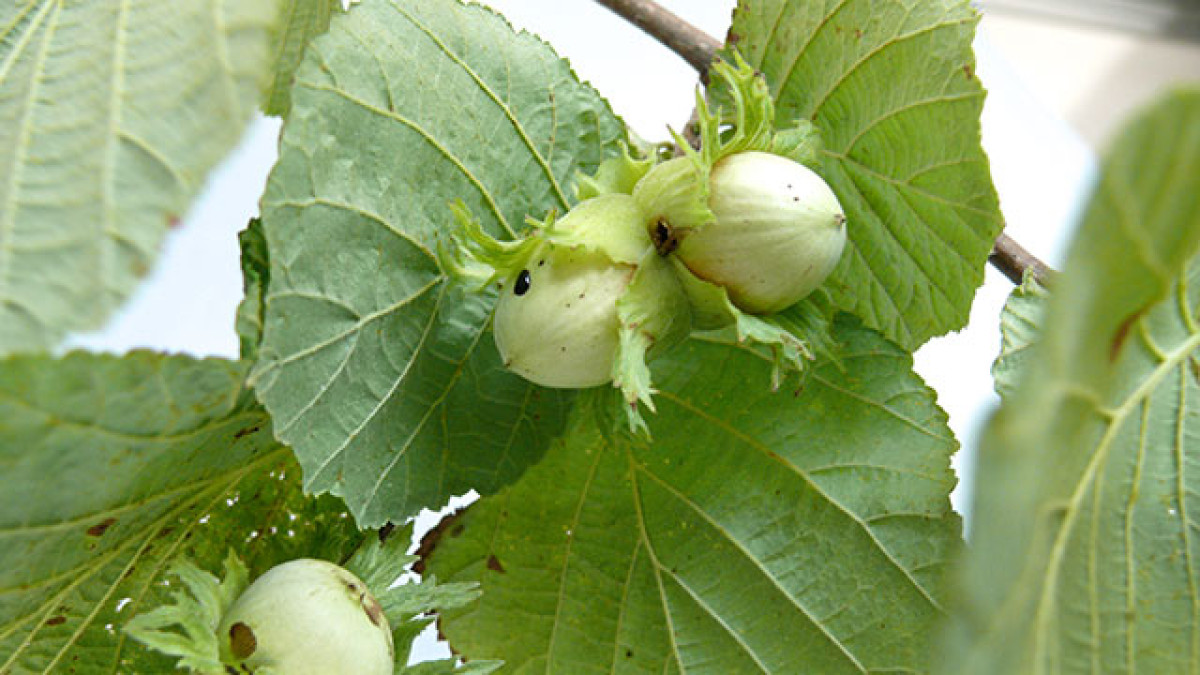
This is what the fruits of a Hazelnut look like
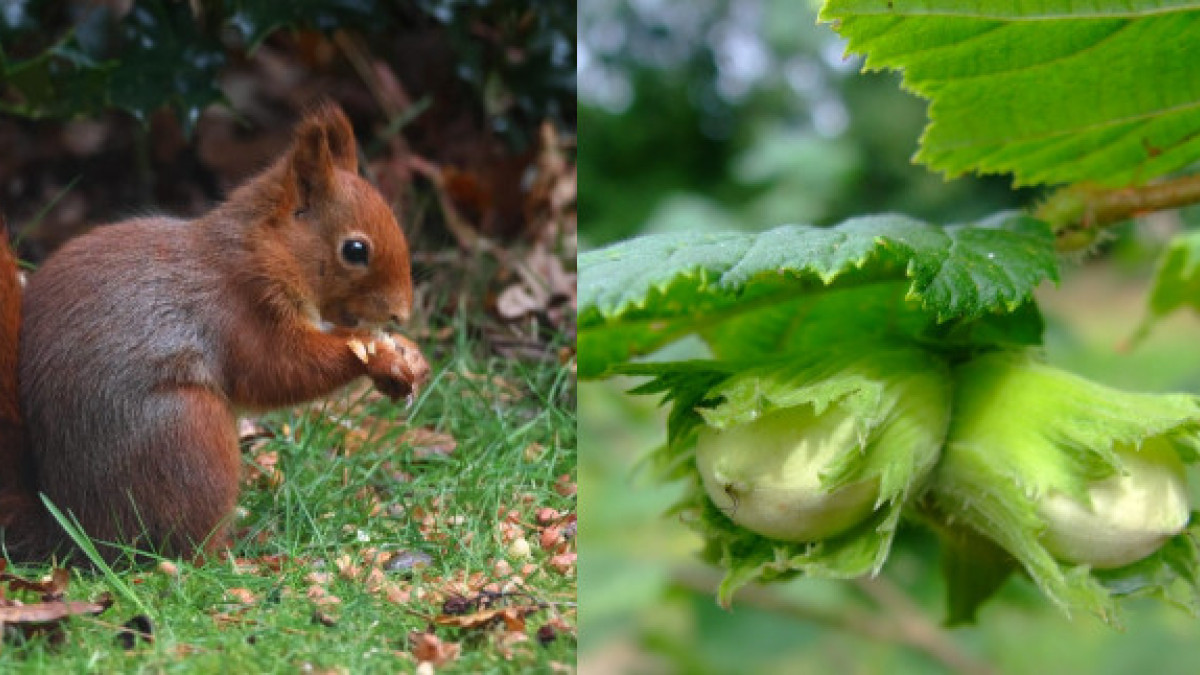
This is what a Hazelnut in bloom looks like
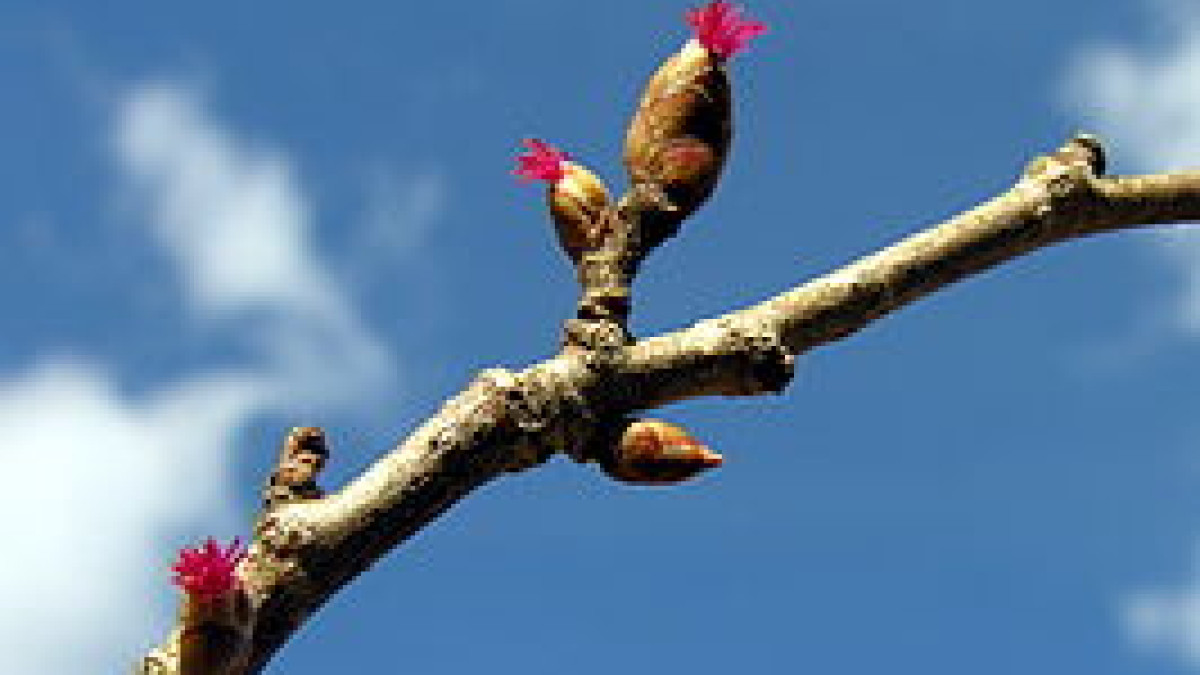
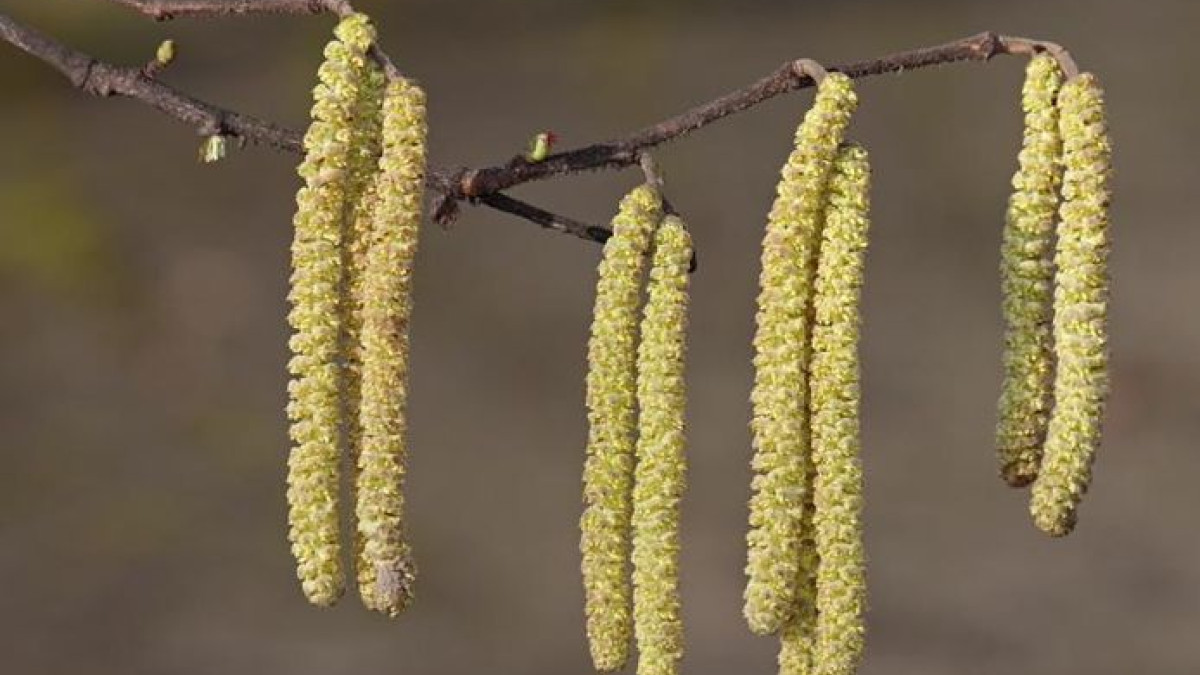
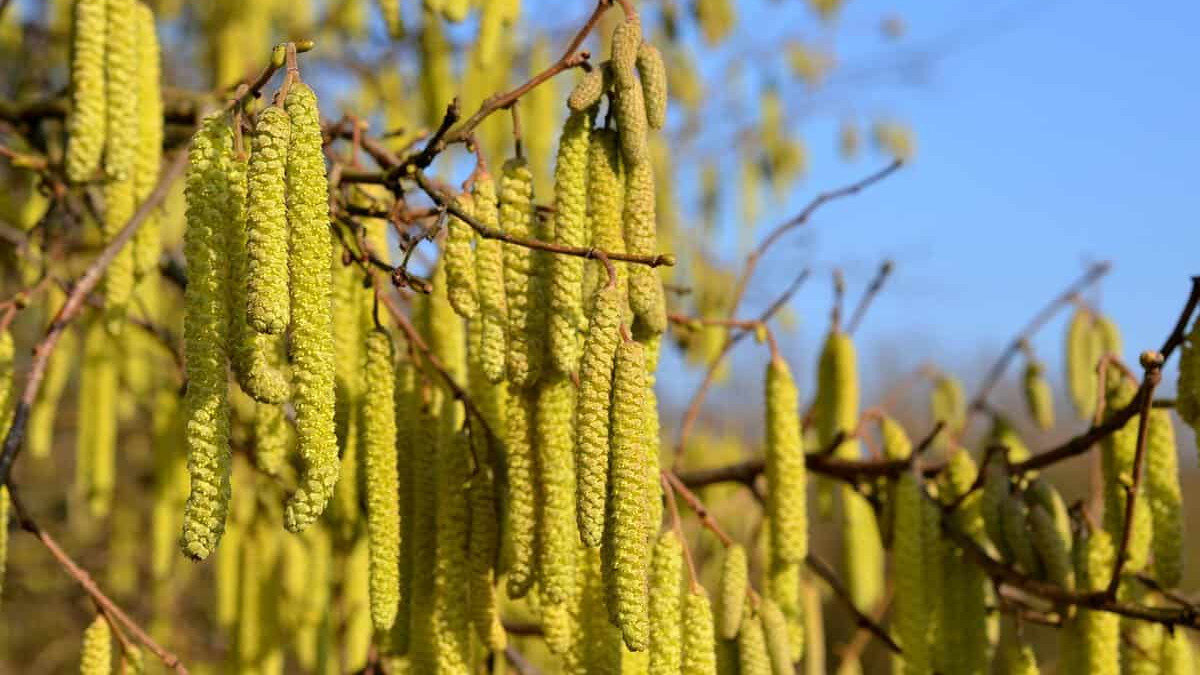
This is what the bud of a Hazelnut looks like
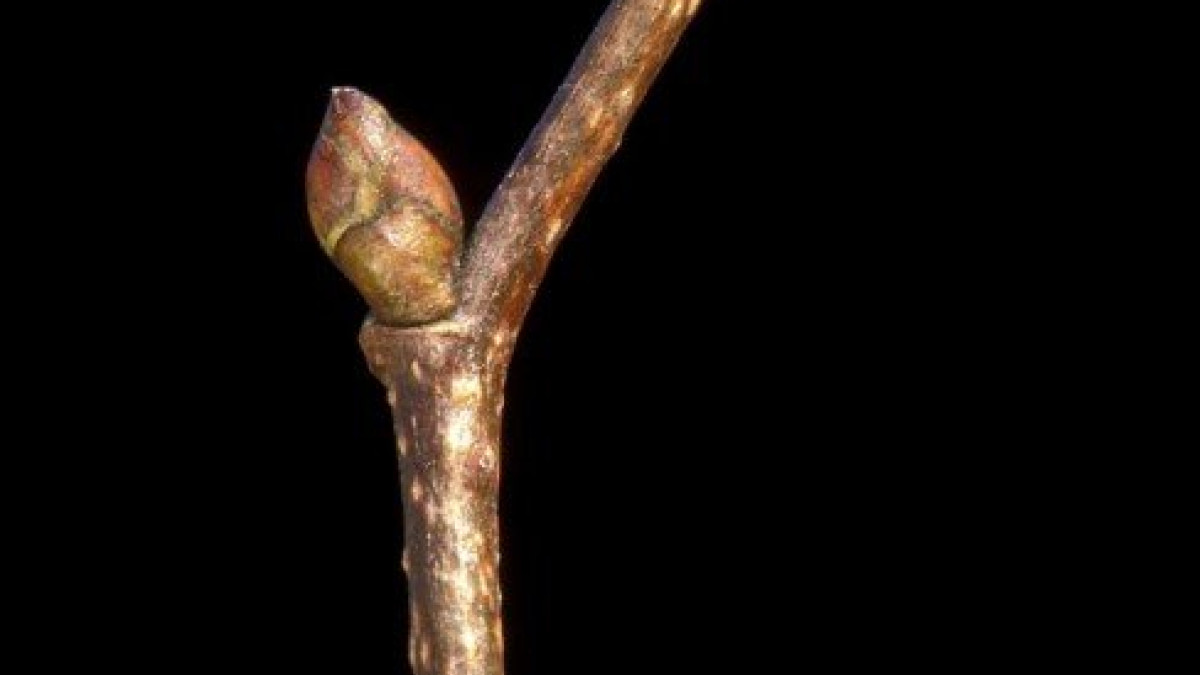
This is what the leaf of a Hazelnut looks like