



Elder
General characteristics of a Elder
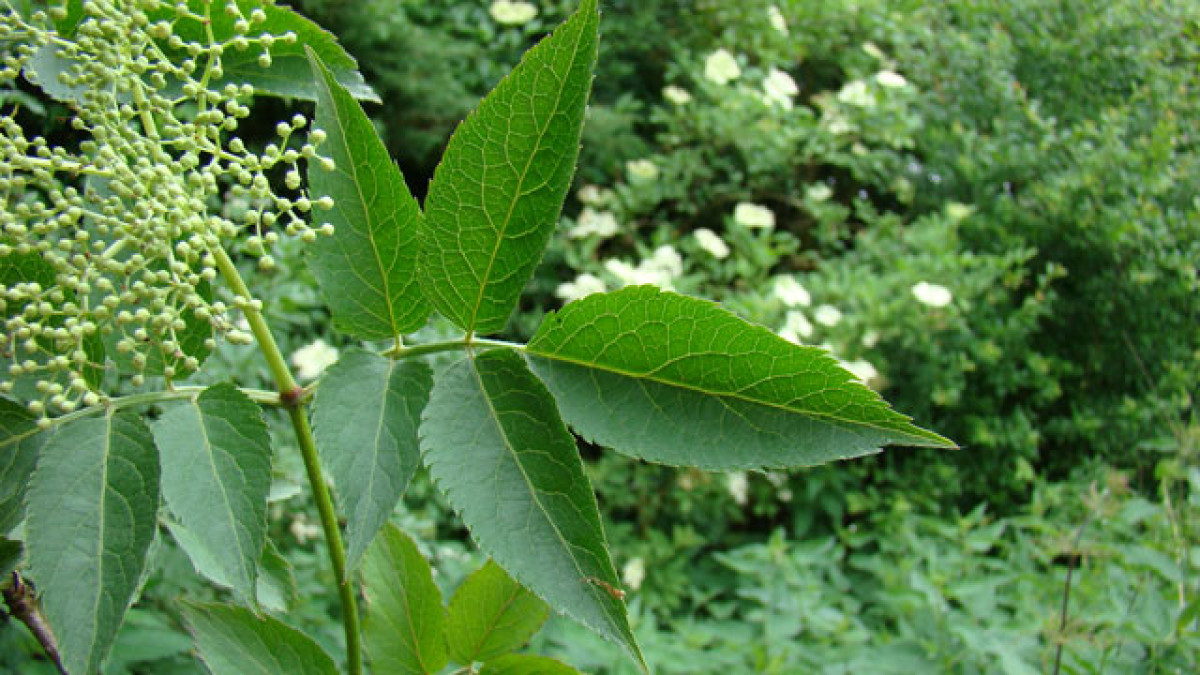
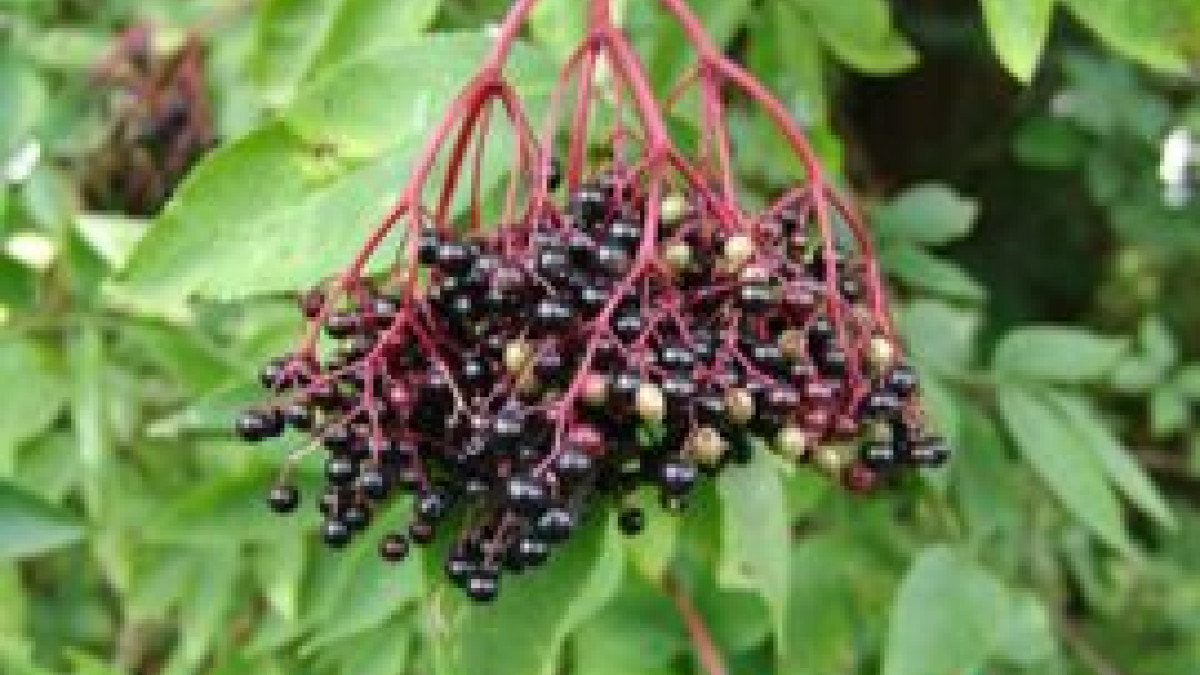
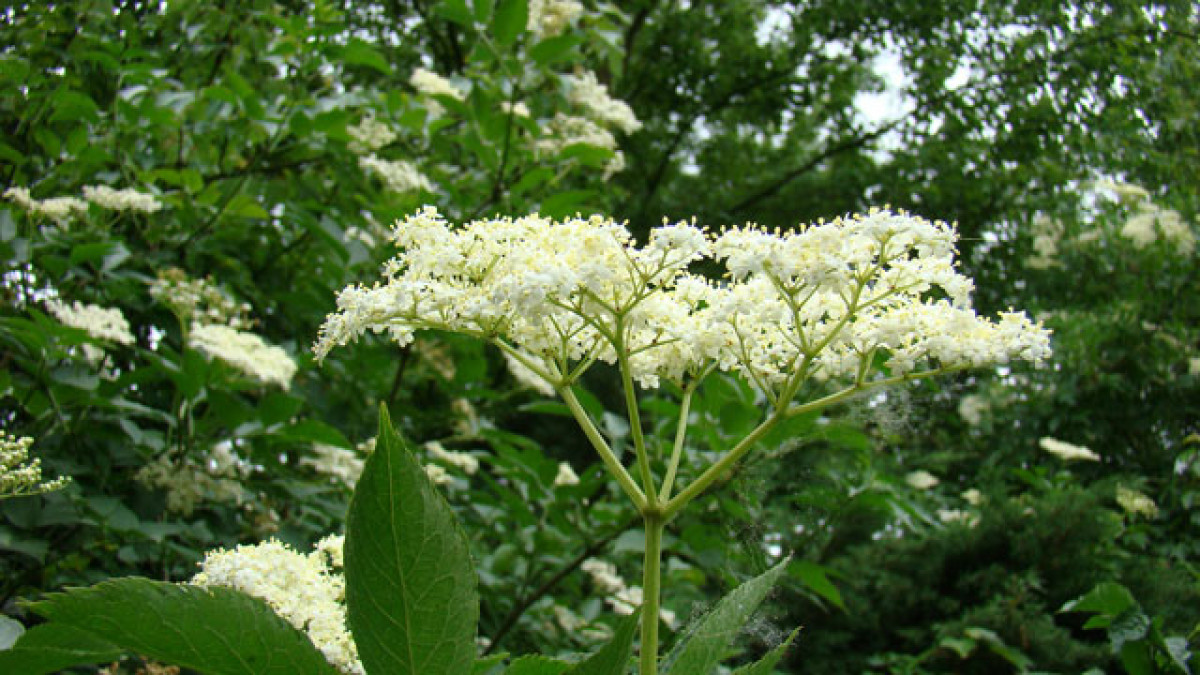
The common elder is a very hardy, semi-woody shrub with compound, serrated, dark green leaves that emit a strong fragrance when crushed. The numerous young shoots are initially green and covered with warts. As they age, they become woody, turn grayish-brown, and develop coarse longitudinal ribs. The branches are filled with a spongy white pith that can be easily removed. In late May and early June, the hermaphroditic flowers appear en masse in flat, umbel-shaped panicles of 10 to 25 cm on the one-year-old twigs. Later, the initially green berries appear, which ripen first red and then glossy black. These berries are a delicacy for birds, which disperse the long-lived seeds (over 5 years) en masse.
The flowers can be made into a tea. The decoction can be thickened with sugar to make a syrup. Elderberries can be eaten when fully ripe, but are more commonly used as a base for syrup, jam, wine, and gin. Cooking black elderberries destroys the harmful substances (www.infoNu.nl).
The warning is that you should not eat unripe elderberries because they may contain cyanide. You would have to eat a lot of cyanide to notice any effects. Cooking ripe elderberries eliminates the cyanide content.
The common elderberry is poisonous to many animals due to cyanide compounds in its leaves. It is eaten by red deer, which have no trouble digesting the plant parts.
Characteristics
How to plant a Elder
Usually supplied as stakes of approximately 60 cm long with three or more nodes. Dig at least 20 cm deep so that one or two nodes are below ground level. These nodes will root instead of producing leaves and branches. Note that after three years, the elderberry is already a mature shrub and often the largest of all the plantings.
How to harvest a Elder
Cuttings can be made from the young shoots in spring.
Caring for and pruning your Elder
As can be seen from the previous section, the elderberry is extremely undemanding and requires little extra care. Those who prefer abundant, large berries are advised to plant a good variety and schedule annual maintenance pruning. This maintenance pruning is best done during the dormant season (November to March) and consists of pruning away the dead wood along with about a quarter of the old branches. This produces many young shoots, of which about ten are retained each year as fruiting wood. Old, neglected shrubs can easily be rejuvenated by cutting them back drastically to 30 to 50 cm above the ground, and of the many resulting shoots, keeping about ten, which can then be regularly rejuvenated. If you want to cultivate the elderberry into a tree (prune away all shoots except one strong, straight shoot, which should only be topped once the desired trunk height has been reached), a support stake for this shallow-rooted shrub is absolutely necessary.
Where does a Elder grow
In the wild, the elderberry grows in sunny to partially shaded locations on dry to moist, moderately to very nutrient-rich, often calcareous and well-cultivated soil. It is often found in hedgerows and thickets, in light deciduous forests, in poplar plantations, on fallow land, and along water's edges. In short, the elderberry has very few requirements for its habitat, but it does produce more berries in fertile, nitrogen-rich soils, and the berries ripen more evenly in a sunny location, which makes harvesting and processing much easier.
General
| Origin |
Native
|
| Tree Type | Shrub |
Length and Age
| Length in about 10 years | 3 Up to 5 Meter |
| Reproductive Maturity in How Many Years | 4 Up to 5 year |
| Maximum Age | 30 Up to 50 year |
| Required Space | 9 Up to 25m2 |
| Growth Rate |
Reproduction
| Tree is Self-Pollinating | Yes |
| Reproduction Method |
To cut (cutting is between 5 and 50 cm)
Makes seedlings
|
| Reproduction rate |
|
Reproduction rate
| 1. Very low reproduction rate. The plant hardly spreads, has few seeds or vegetative spread (e.g., trees with heavy seeds). |
| 2. Low reproduction rate. Spread via limited seed production or specific conditions required |
| 3. Average reproduction rate. Regular spread, depending on wind, water, or animals, at a moderate speed (e.g., dandelion). |
| 4. High reproduction rate. Many seeds and multiple spread strategies (wind, birds, vegetative). Quickly colonizes open spaces |
| 5. Very high reproduction rate. Invasive species that spread explosively over large distances (e.g., Japanese knotweed). |
Pruning Period
| This Tree is Evergreen | Yes |
| Summer | No pruning in summer |
| Winter | November tot March |
| Leaf Shapes | Lanceolate |
| Easy to prune | No |
Bark Characteristics Seedling (50-200cm)
| Lenticels | Yes |
| Colour |
Bud Characteristics Seedling (50-200cm)
| Colour | |
| Bud Position |
Opposite
|
| Bud Shape |
Egg-shaped
|
Other
| Root | Information not available |
| Bloom |
Has flowers
Has fruits
|
| Wind sensitivity | Moderately sensitive to (sea) wind |
Diseases
| Sensitive to the Following Diseases | Information not available |
Harvest/recognition in winter
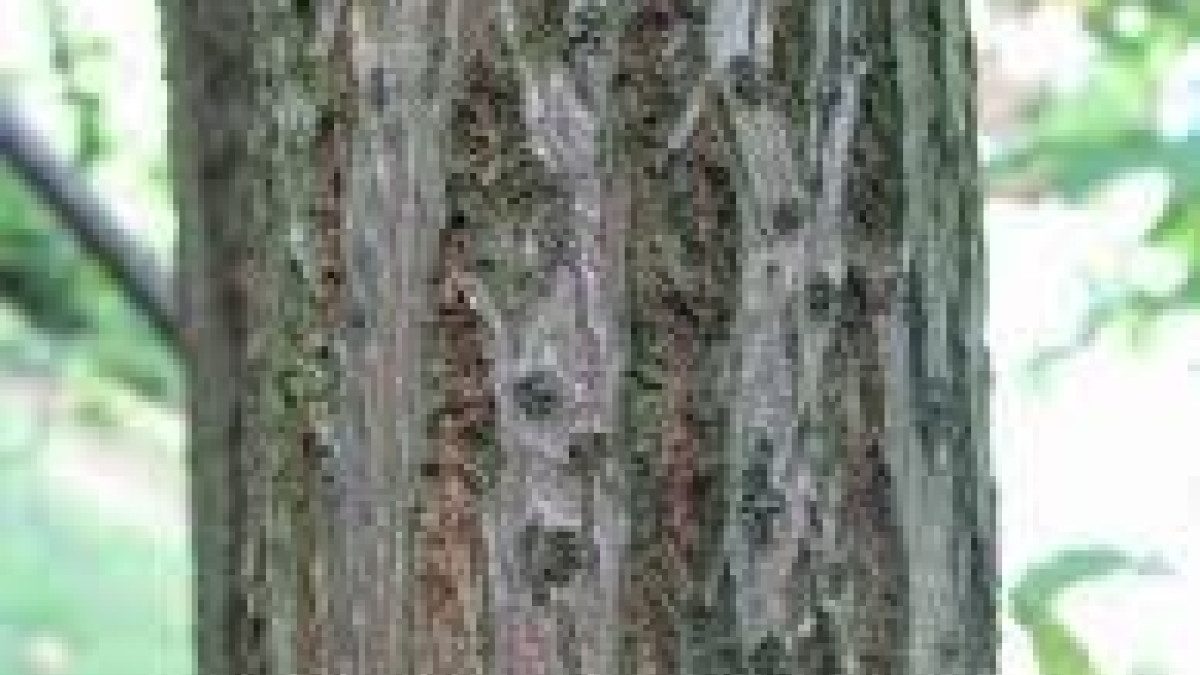
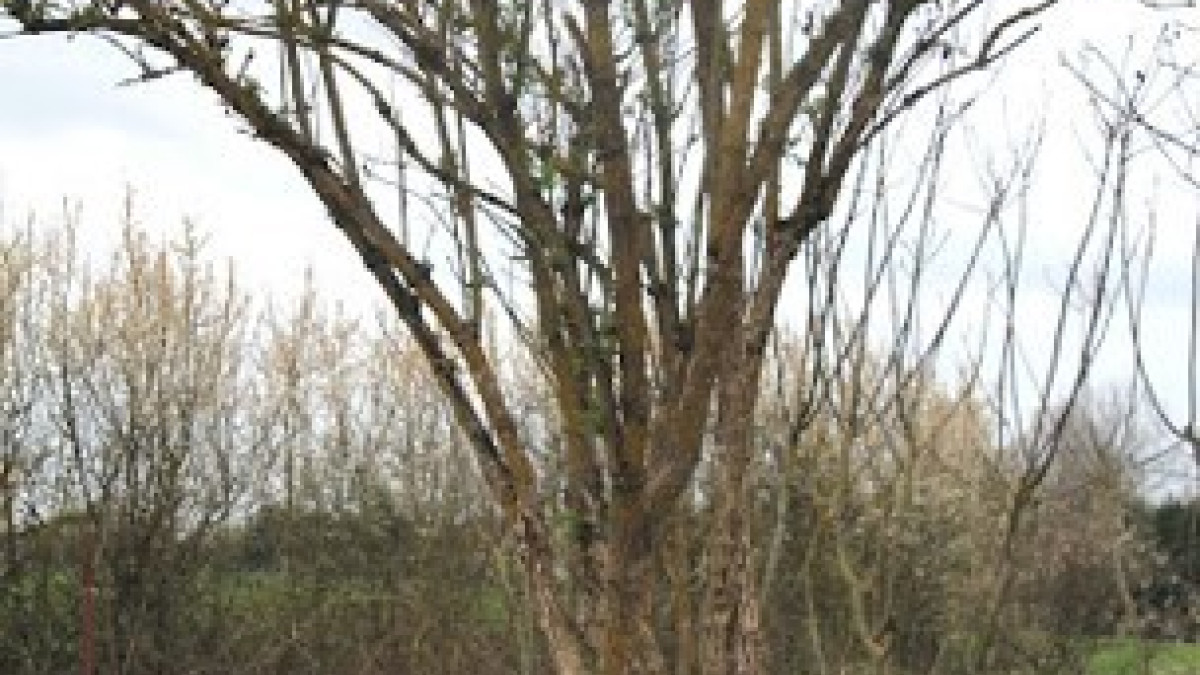
In winter, you can recognize the elderberry by the rough, irregular bark of its branches with distinctive pimples. These are cork-like openings through which air enters and exits the plant. The inner core of the branches is soft and easily squeezed out. This is why the English call the elderberry the "pipe tree."
Light requirement of the Elder
Suitable soil types for the Elder
| Soil type | Suitability |
|---|---|
| light clay |
|
| heavy clay |
|
| sand |
|
| peatland |
|
| Loam |
|
| Moerig op zand |
|
| Lichte zavel |
|
| Zware zavel |
|
Humidity
Suitable acidity level for the Elder
Nutritional needs of the Elder
| 1. | Very nutrient-poor soil |
| 2. | Very nutrient-poor to nutrient-poor soil |
| 3. | Nutrient-poor soil |
| 4. | Nutrient-poor to moderately nutrient-rich soil |
| 5. | Moderately nutrient-rich soil |
| 6. | Moderately nutrient-rich to nutrient-rich soil |
| 7. | Nutrient-rich soil |
| 8. | Extremely nutrient-rich soil |
| 9. | Very extremely nutrient-rich soil |
Humidity
| 1. | Extremely dry soils |
| 2. | Extremely dry to dry soils |
| 3. | Dry soils |
| 4. | Dry to dry/moist soils |
| 5. | Dry/moist soils |
| 6. | Dry/moist to moist soils |
| 7. | Moist soils |
| 8. | Moist to wet soils |
| 9. | Wet soils |
To be applied in landscapes
| Landscape | Suitability |
|---|---|
| Agroforestry |
|
| Hedge |
|
| Hedge |
|
| Forest |
|
| Feeding hedge |
|
| Back yard |
|
| Small back yard |
|
| Solitary |
|
| Wood wall |
|
Cultural-historical value
Insects
| How many insects typically live on this tree/plant? | |
| Which insect groups live on this tree/plant? |
Butterflies
Hoverflies
Beetles
|
| Are there insects dependent on this species? | No |
| Which insect species are dependent on this tree/plant? |
brown-barred tortrix
Anania coronata
Udea prunalis
|
Birds
| Average number of birds per tree/plant? | |
| Which bird groups live on this tree/plant? |
common blackbirds
common starlings
|
Mammals
| Average number of mammals per tree/plant? | |
| Which mammal groups live on this tree/plant? |
|
| Are there mammals dependent on this species? | No |
| Which mammal species are dependent on this tree/plant? |
Bloom Period
| Summer | May Up to July |
Tree Species
| Tree species that this tree prefers to grow with |
|
Suitable for mammals?
| Mammal | Suitability |
|---|---|
| Horse |
|
| Human |
|
| Roe deer |
|
| Sheep |
|
| Pig |
|
| Wild boar |
|
| Deer |
|
| Dog |
|
| Cat |
|
| Chicken |
|
| Cow |
|
| Mouse |
|
| Foxes |
|
| Herbivorous rodents |
|
| Goat |
|
| Ferret |
|
| Squirrel |
|
| Badgers |
|
| Beavers |
|
Explanation
Explanation
Edibility
- Toxic: This tree or shrub is toxic to mammals and absolutely unsuitable for consumption.
- Very unsuitable: This tree or shrub is unsuitable for consumption by mammals and can be harmful.
- Unsuitable: This tree or shrub is generally unsuitable for consumption by mammals and can have adverse effects.
- Moderately suitable: This tree or shrub is moderately suitable as food for mammals, possibly with certain risks or limitations.
- Suitable: This tree or shrub is generally suitable as food for mammals, with little to no risks.
- Very suitable: This tree or shrub is very suitable as food for mammals, safe, and of high nutritional value.
Trunk Height
Average Trunk Height (hg) of the basal area median tree
Information not available
Trunk Diameter
(dg) (1.30m) of the basal area median tree.
Information not available
Aboveground Biomass
in whole kgInformation not available
Belowground Biomass
in whole kgInformation not available
Substance Binder
| Which substances can be bound or absorbed? |
CO2
Particulate matter
|
Carbon Attraction (kf)
| (dg) (1.30m) of the basal area median tree | Deciduous Trees (Kf = 0,48) |
Warming Resistance
| This tree is well resistant to the warming (plus 3 degrees) of our climate and fits into the future of our climate (heat and drought resistant). | No |
CO2
| 0. | not filled in |
| 1. | no storage |
| 2. | low storage |
| 3. | moderate storage |
| 4. | high storage |
| 5. | very high storage |
Fine Dust
| 0. | not filled in |
| 1. | no capture capacity |
| 2. | low capture capacity |
| 3. | moderate capture capacity |
| 4. | high capture capacity |
| 5. | very high capture capacity |
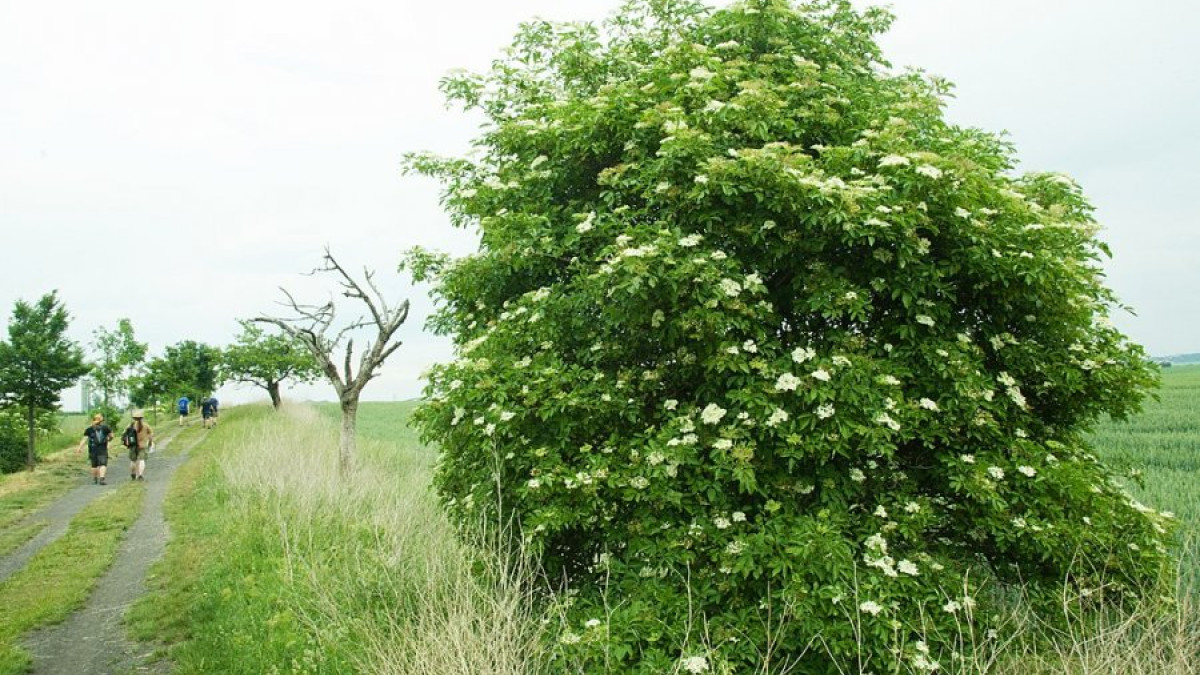
This is what an adult tree Elder looks like
This is what the fruits of a Elder look like
This is what a Elder in bloom looks like
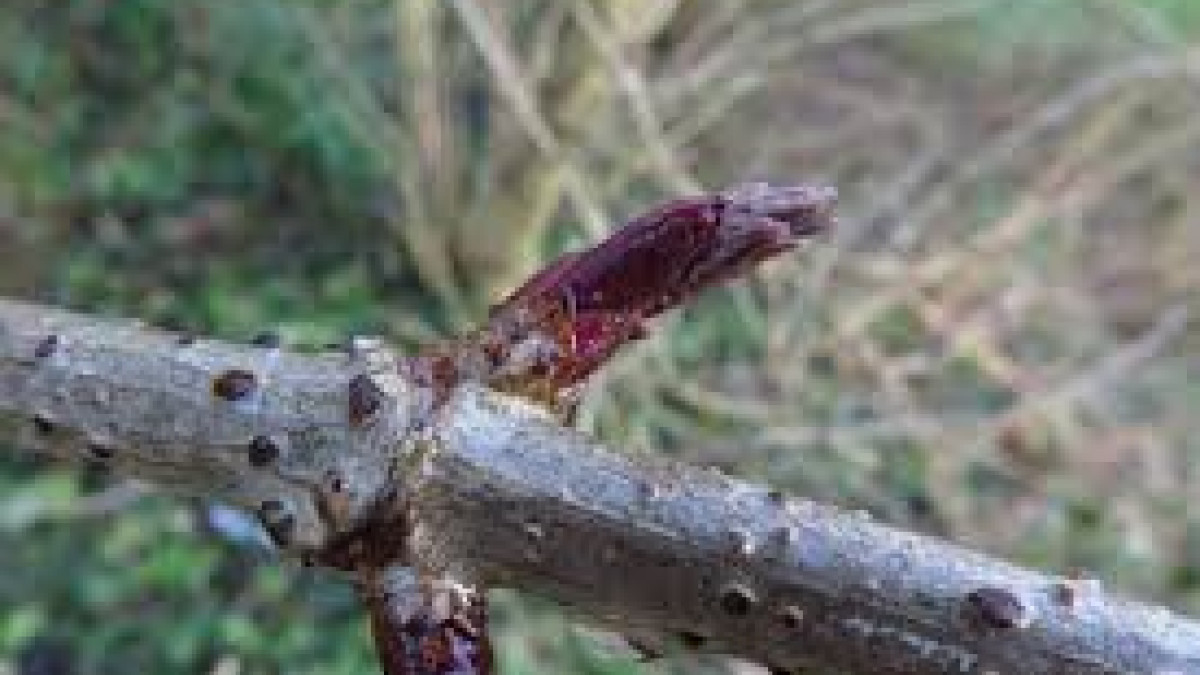
This is what the bud of a Elder looks like
This is what the leaf of a Elder looks like