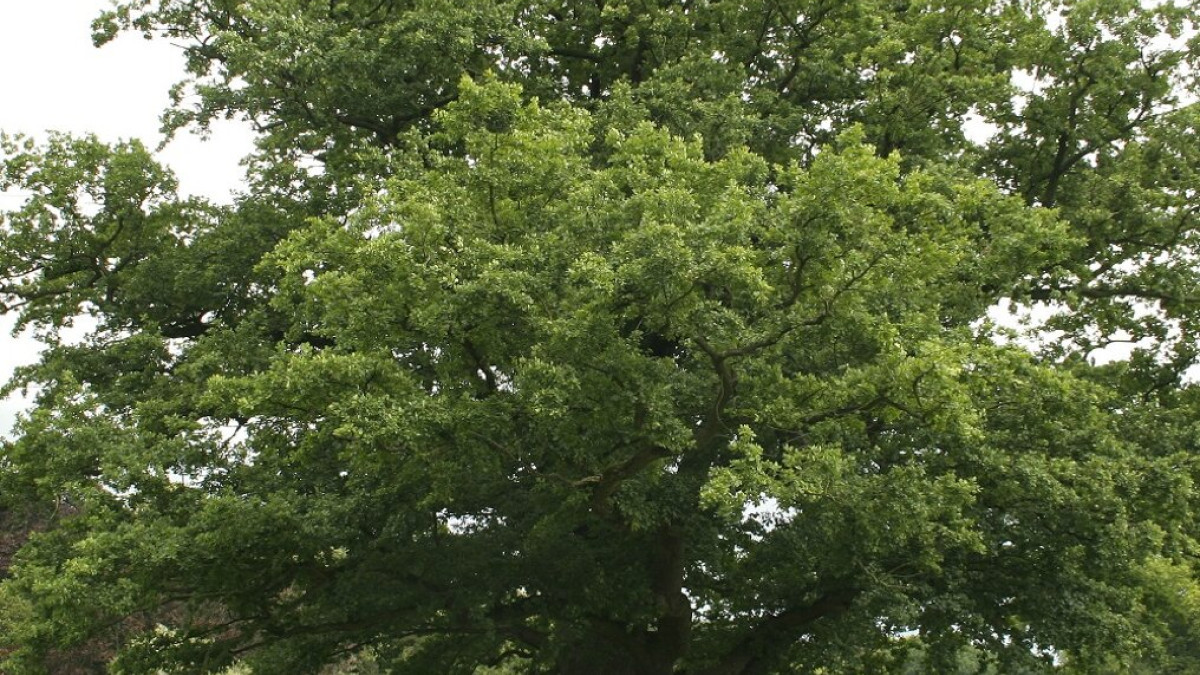




Eik (mix)

General characteristics of a Eik (mix)
Eiken behoren tot de meest beeldbepalende en ecologisch waardevolle bomen van Europa. Ze staan bekend om hun lange levensduur, stevige hout en karakteristieke gelobde bladeren. Afhankelijk van de soort kunnen eiken uitgroeien tot grote bomen van meer dan 30 meter hoog. De vruchten, eikels genoemd, vormen een belangrijke voedselbron voor vogels en zoogdieren. Eiken ondersteunen een uitzonderlijk grote biodiversiteit en bieden leefgebied aan honderden soorten insecten, schimmels, korstmossen en andere organismen. Door hun robuustheid, landschappelijke waarde en grote betekenis voor de natuur zijn eiken onmisbare soorten in bossen, houtwallen, parken en aanplantingen.
Characteristics
How to plant a Eik (mix)
Plant jonge eiken op een zonnige tot halfbeschaduwde standplaats in goed doorlatende grond. Eiken zijn aanpasbaar en groeien op uiteenlopende bodemtypen, van zand tot leem en lichte klei. Geef jonge bomen tijdens de eerste groeijaren extra water bij langdurige droogte. Houd voldoende ruimte vrij, aangezien veel eikensoorten uitgroeien tot grote bomen.
How to harvest a Eik (mix)
Zaailingen van eiken worden vaak aangetroffen in de omgeving van volwassen eikenbomen, waar gaaien, muizen en eekhoorns eikels hebben verstopt. Oogst jonge boompjes bij voorkeur wanneer ze tussen de 10 en 50 cm hoog zijn. Steek ze zorgvuldig uit, omdat eiken al vroeg een diepe penwortel ontwikkelen. Verplant de zaailingen zo snel mogelijk naar hun nieuwe groeiplaats.
Caring for and pruning your Eik (mix)
Eiken vragen na vestiging weinig onderhoud. Snoei alleen wanneer nodig en bij voorkeur in de zomer. Verwijder dode, beschadigde of ongewenst groeiende takken, maar voorkom zware snoei omdat eiken daar minder goed op reageren.
Where does a Eik (mix) grow
Eiken komen van nature voor in loofbossen, bosranden, houtwallen en parklandschappen. Afhankelijk van de soort groeien ze op droge zandgronden, lemige bodems of voedselrijkere locaties. Eiken behoren tot de ecologisch meest waardevolle boomgroepen van Europa en bieden voedsel en leefgebied aan honderden soorten insecten, vogels, zoogdieren en schimmels.
General
| Origin | Information not available |
| Tree Type | Deciduous tree |
Length and Age
| Length in about 10 years | Up to Meter |
| Reproductive Maturity in How Many Years | Up to year |
| Maximum Age | Up to year |
| Required Space | Up to m2 |
| Growth Rate |
Reproduction
| Tree is Self-Pollinating | No |
| Reproduction Method | |
| Reproduction rate |
|
Reproduction rate
| 1. Very low reproduction rate. The plant hardly spreads, has few seeds or vegetative spread (e.g., trees with heavy seeds). |
| 2. Low reproduction rate. Spread via limited seed production or specific conditions required |
| 3. Average reproduction rate. Regular spread, depending on wind, water, or animals, at a moderate speed (e.g., dandelion). |
| 4. High reproduction rate. Many seeds and multiple spread strategies (wind, birds, vegetative). Quickly colonizes open spaces |
| 5. Very high reproduction rate. Invasive species that spread explosively over large distances (e.g., Japanese knotweed). |
Pruning Period
| This Tree is Evergreen | No |
| Summer | No pruning in summer |
| Winter | Information not available |
| Leaf Shapes | Circle round |
| Easy to prune | No |
Bark Characteristics Seedling (50-200cm)
Bud Characteristics Seedling (50-200cm)
| Bud Position | Information not available |
| Bud Shape | Information not available |
Other
| Root | Information not available |
| Bloom | Information not available |
| Wind sensitivity |
Diseases
| Sensitive to the Following Diseases | Information not available |
Harvest/recognition in winter
Jonge eiken zijn herkenbaar aan hun afwisselend geplaatste knoppen en vaak nog aanwezige bruine bladeren die gedurende de winter aan de twijgen kunnen blijven hangen. Zaailingen hebben meestal gelobde bladeren en een stevige hoofdstengel. In de winter vallen de karakteristieke eindknoppen op: meerdere knoppen die gegroepeerd aan het uiteinde van de twijg staan.
Light requirement of the Eik (mix)
Suitable soil types for the Eik (mix)
Information not available
Humidity
Suitable acidity level for the Eik (mix)
Nutritional needs of the Eik (mix)
| 1. | Very nutrient-poor soil |
| 2. | Very nutrient-poor to nutrient-poor soil |
| 3. | Nutrient-poor soil |
| 4. | Nutrient-poor to moderately nutrient-rich soil |
| 5. | Moderately nutrient-rich soil |
| 6. | Moderately nutrient-rich to nutrient-rich soil |
| 7. | Nutrient-rich soil |
| 8. | Extremely nutrient-rich soil |
| 9. | Very extremely nutrient-rich soil |
Humidity
| 1. | Extremely dry soils |
| 2. | Extremely dry to dry soils |
| 3. | Dry soils |
| 4. | Dry to dry/moist soils |
| 5. | Dry/moist soils |
| 6. | Dry/moist to moist soils |
| 7. | Moist soils |
| 8. | Moist to wet soils |
| 9. | Wet soils |
To be applied in landscapes
Information not available
Cultural-historical value
Insects
| How many insects typically live on this tree/plant? | |
| Which insect groups live on this tree/plant? |
|
| Are there insects dependent on this species? | No |
| Which insect species are dependent on this tree/plant? |
Birds
| Average number of birds per tree/plant? | |
| Which bird groups live on this tree/plant? |
|
Mammals
| Average number of mammals per tree/plant? | |
| Which mammal groups live on this tree/plant? |
|
| Are there mammals dependent on this species? | No |
| Which mammal species are dependent on this tree/plant? |
Bloom Period
| Summer | August Up to August |
Tree Species
| Tree species that this tree prefers to grow with |
|
Suitable for mammals?
| Mammal | Suitability |
|---|---|
| Human |
|
| Horse |
|
| Cow |
|
| Pig |
|
| Chicken |
|
| Goat |
|
| Sheep |
|
| Herbivorous rodents |
|
| Dog |
|
| Cat |
|
| Foxes |
|
| Badgers |
|
| Ferret |
|
| Mouse |
|
| Squirrel |
|
| Wild boar |
|
| Deer |
|
| Roe deer |
|
| Beavers |
|
| Bats |
|
Explanation
Explanation
Edibility
- Toxic: This tree or shrub is toxic to mammals and absolutely unsuitable for consumption.
- Very unsuitable: This tree or shrub is unsuitable for consumption by mammals and can be harmful.
- Unsuitable: This tree or shrub is generally unsuitable for consumption by mammals and can have adverse effects.
- Moderately suitable: This tree or shrub is moderately suitable as food for mammals, possibly with certain risks or limitations.
- Suitable: This tree or shrub is generally suitable as food for mammals, with little to no risks.
- Very suitable: This tree or shrub is very suitable as food for mammals, safe, and of high nutritional value.
Trunk Height
Average Trunk Height (hg) of the basal area median tree
Information not available
Trunk Diameter
(dg) (1.30m) of the basal area median tree.
Information not available
Aboveground Biomass
in whole kgInformation not available
Belowground Biomass
in whole kgInformation not available
Substance Binder
Information not available
Carbon Attraction (kf)
| (dg) (1.30m) of the basal area median tree | Deciduous Trees (Kf = 0,48) |
Warming Resistance
| This tree is well resistant to the warming (plus 3 degrees) of our climate and fits into the future of our climate (heat and drought resistant). | No |
This is what an adult tree Eik (mix) looks like